
Last updated September 21, 2026
Full 25-point door and opener safety check with every visit - springs, cables, rollers, tracks, and your LiftMaster or Chamberlain opener included
You get a price before we start. It does not change when the truck arrives.
 Before
 After
After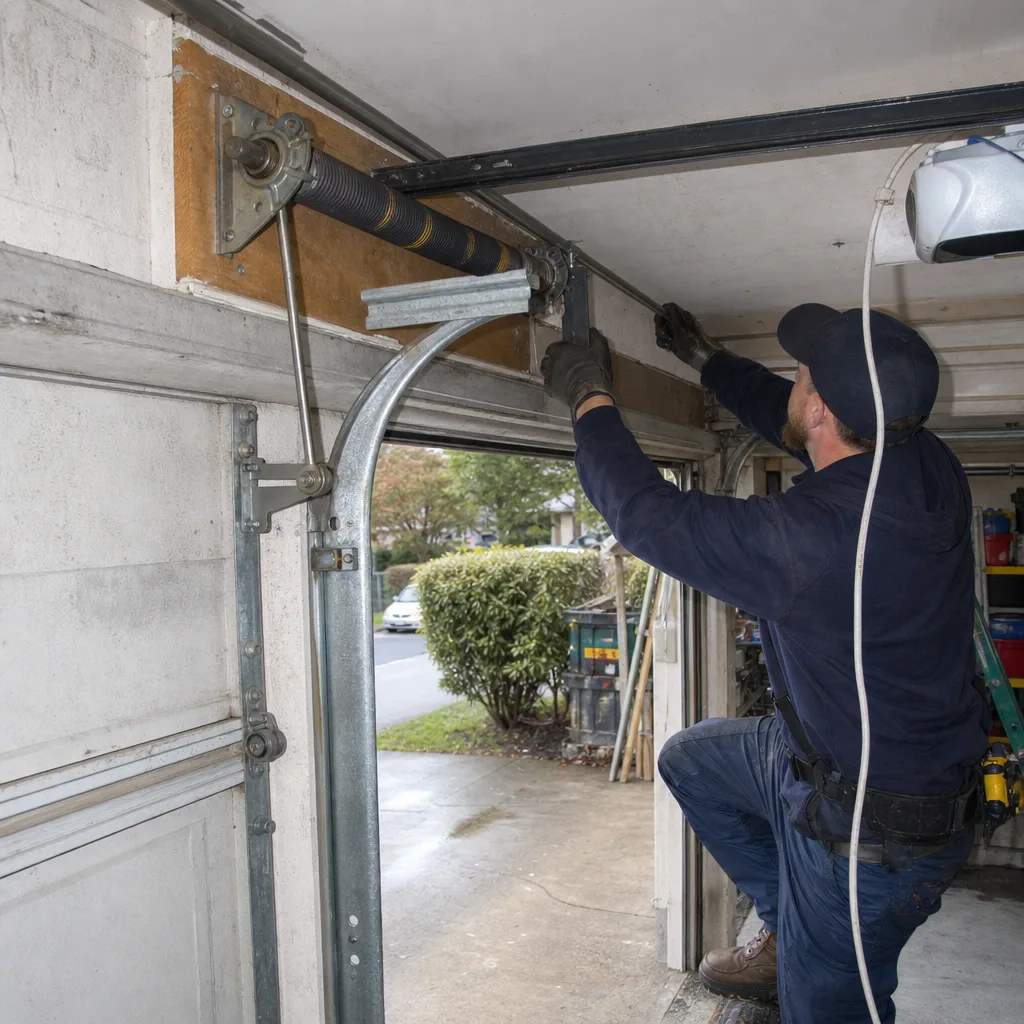 Before
 After
After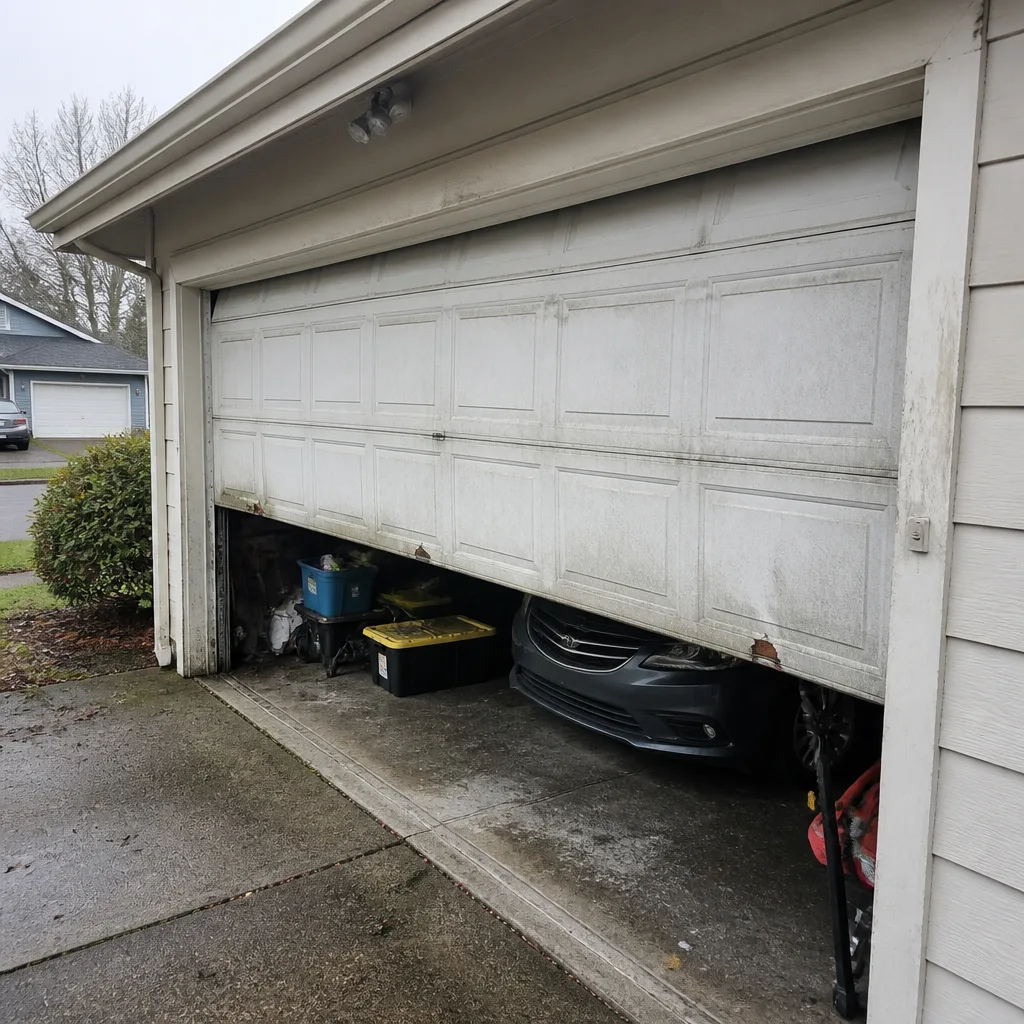 Before
 After
AfterThe Complete Guide to Garage Door in Renton
A torsion spring and a broken cable can produce identical symptoms - a door that won’t open - but the parts cost $30 versus $180 and the labor risk profile is entirely different. Misidentifying one for the other is the single most common expensive mistake Renton homeowners make when they call a garage door company. In this guide, we’ll map the eight interdependent components of a garage door system so you can read a repair quote the way a technician does, understand how Renton’s wet winters accelerate wear on specific parts, and know when successive repairs stop making financial sense. For Garage Door Cost Breakdown: The Renton Homeowner’s Reference for 2026, see our dedicated pricing guide.
Quick Answer
A garage door is a mechanical system of eight interdependent components - springs, cables, drums, rollers, tracks, opener trolley, photo-eye sensors, and weather seals - that must work in sequence for safe operation. In Renton, the combination of wet winters and temperature swings between November and February accelerates corrosion on cable drums and bottom weather seals faster than the national average, making annual inspection of these two components particularly cost-effective. Understanding each part’s function lets you verify that a repair quote addresses the actual failed component, not just the symptom.
Table of Contents
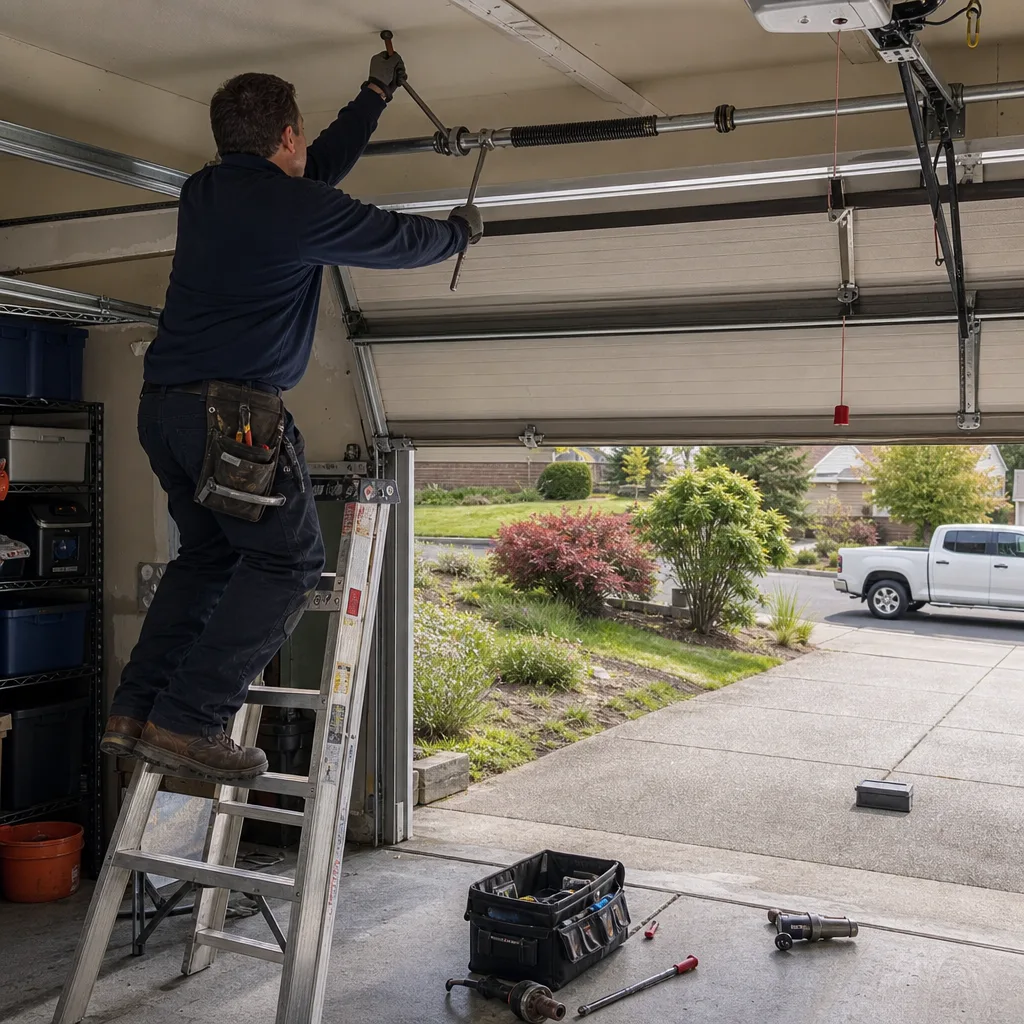
- The Garage Door as a System, Not a Product
- Component-by-Component Breakdown
- How Renton’s Climate Accelerates Specific Failures
- How to Read a Line-Item Repair Quote in King County
- The Documented Photo-First Standard
- When Repairs Stop Making Sense: The Cost-Per-Year Method
- Garage Door Openers: Repair, Replace, or Upgrade
- A Realistic Maintenance Schedule for Renton Homes
 Before
 After
AfterThe Garage Door as a System, Not a Product
Most homeowners in Renton search for “garage door repair” as if they’re buying a single item. The technician arrives, diagnoses one component, and the homeowner wonders why the quote doesn’t match the $89 coupon they saw online. The disconnect is fundamental: a garage door is eight components that must operate in sequence, and failure in any one of them can mimic failure in another.
Here’s the sequence your door follows every cycle. The opener motor turns the sprocket, which moves the trolley carriage along the rail. The trolley pulls the door via the J-arm or drawbar. The door’s weight is counterbalanced by either torsion springs (mounted horizontally above the door) or extension springs (mounted vertically along the tracks). Cables wind and unwind on drums at the end of the spring shaft, keeping the door level. Rollers ride in the tracks. Photo-eye sensors reverse the door if the infrared beam breaks. Weather seals at the bottom and sides block water, debris, and temperature transfer.
When a door won’t open, the symptom travels backward through this chain. A failed logic board in a LiftMaster opener, a snapped torsion spring, a frayed cable, or a seized bottom bracket can all produce the same result: you press the button, hear a motor hum or a loud bang, and nothing moves. The technician’s job is to trace the symptom to its source. Your job, as a homeowner who wants to read the quote with confidence, is to understand which component actually failed and why replacing the wrong one wastes money.
At Servo Garage Doors Renton, we’ve made 18,000+ garage doors right since 2015. Every diagnosis starts with identifying the specific failed component, not treating symptoms. That’s Clause 4 of The Haven Standard: photograph the failed part before quoting a replacement. No exceptions.
Component-by-Component Breakdown
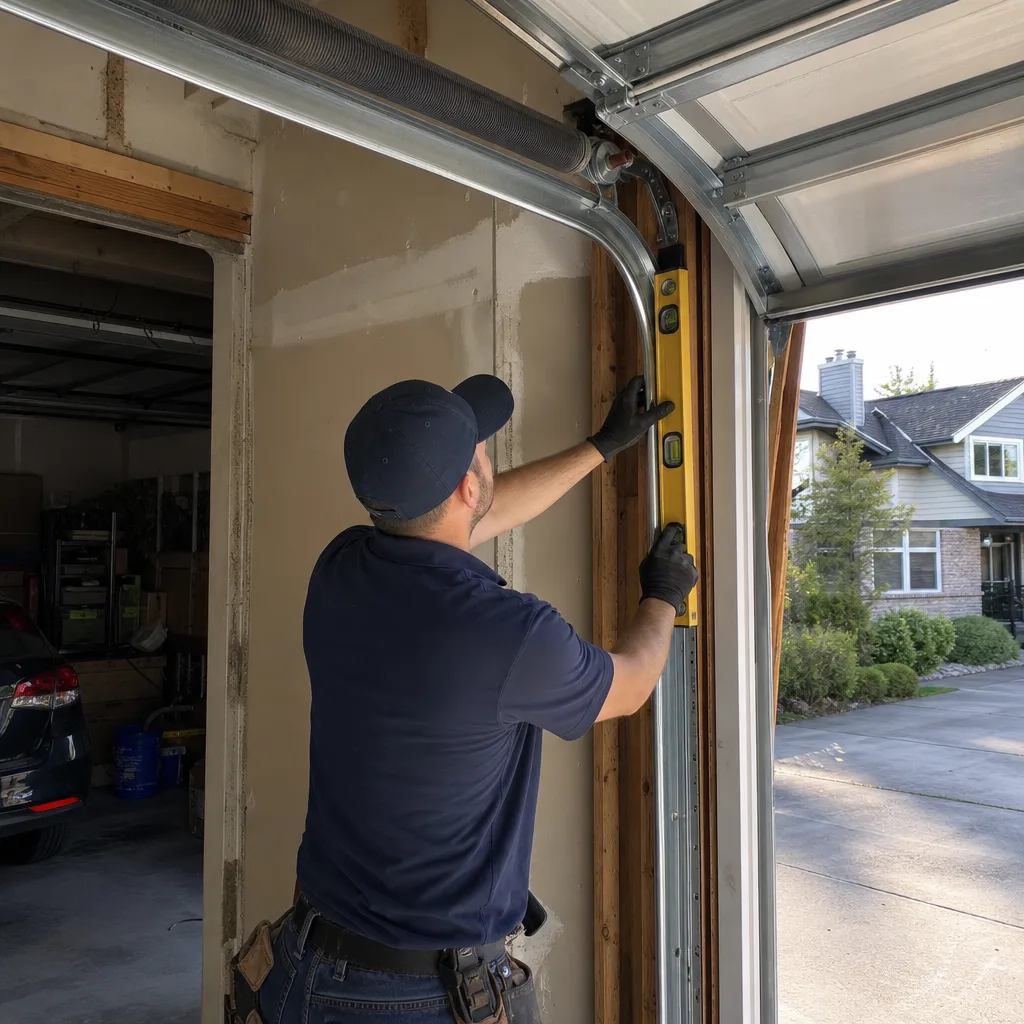
Torsion Springs
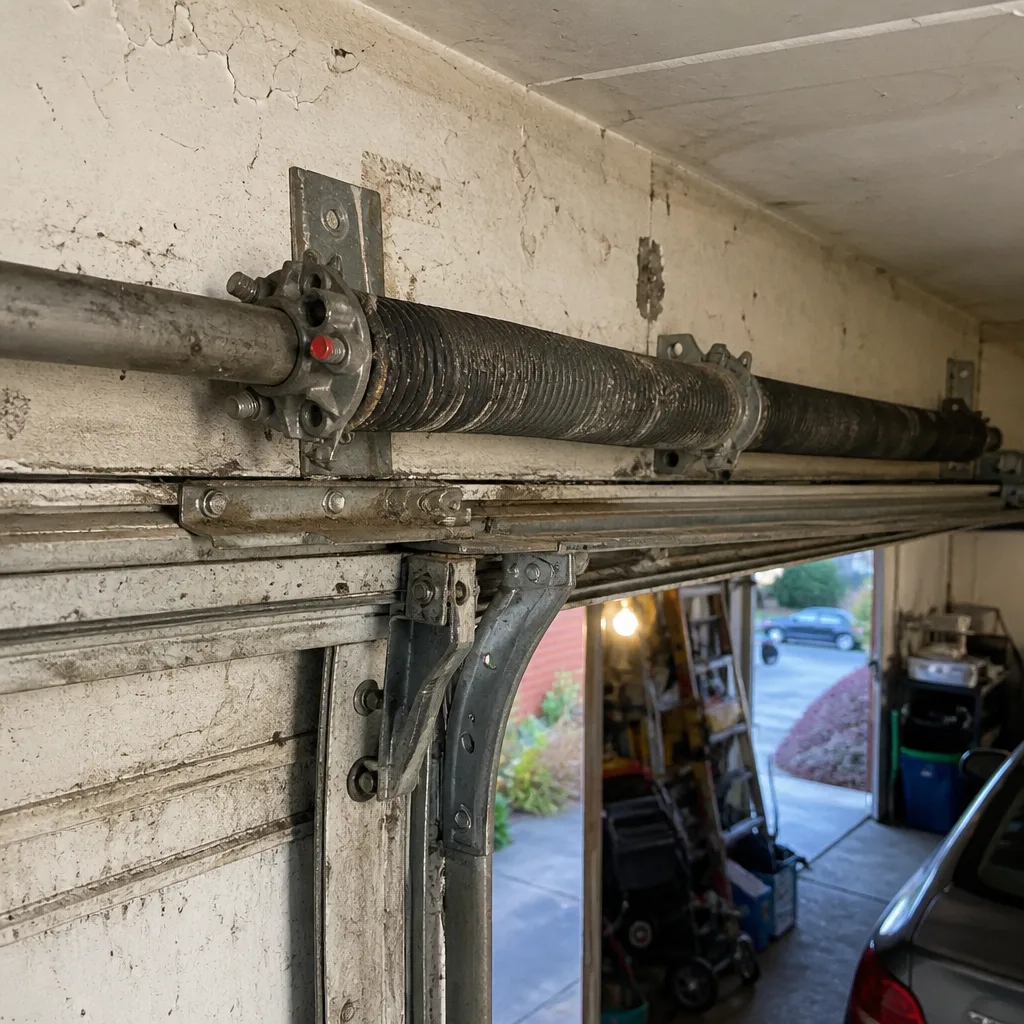
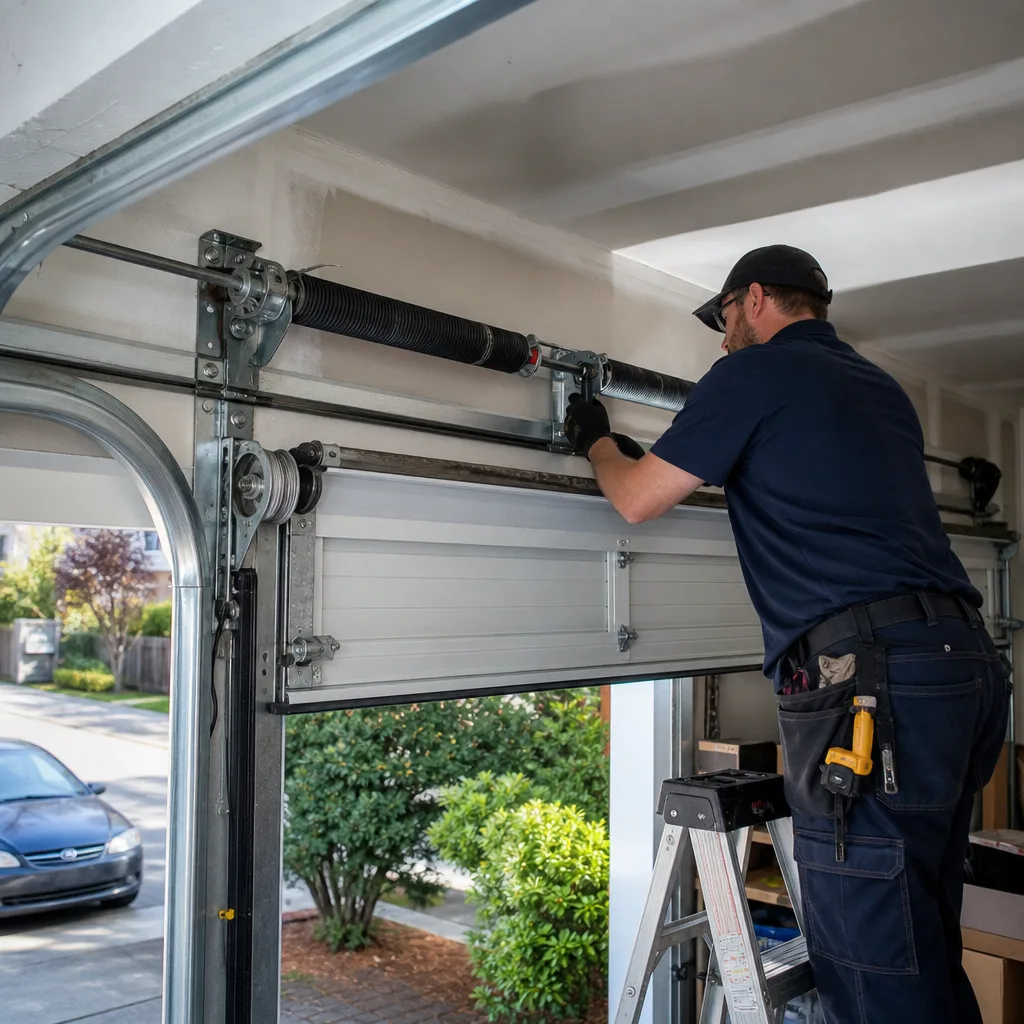
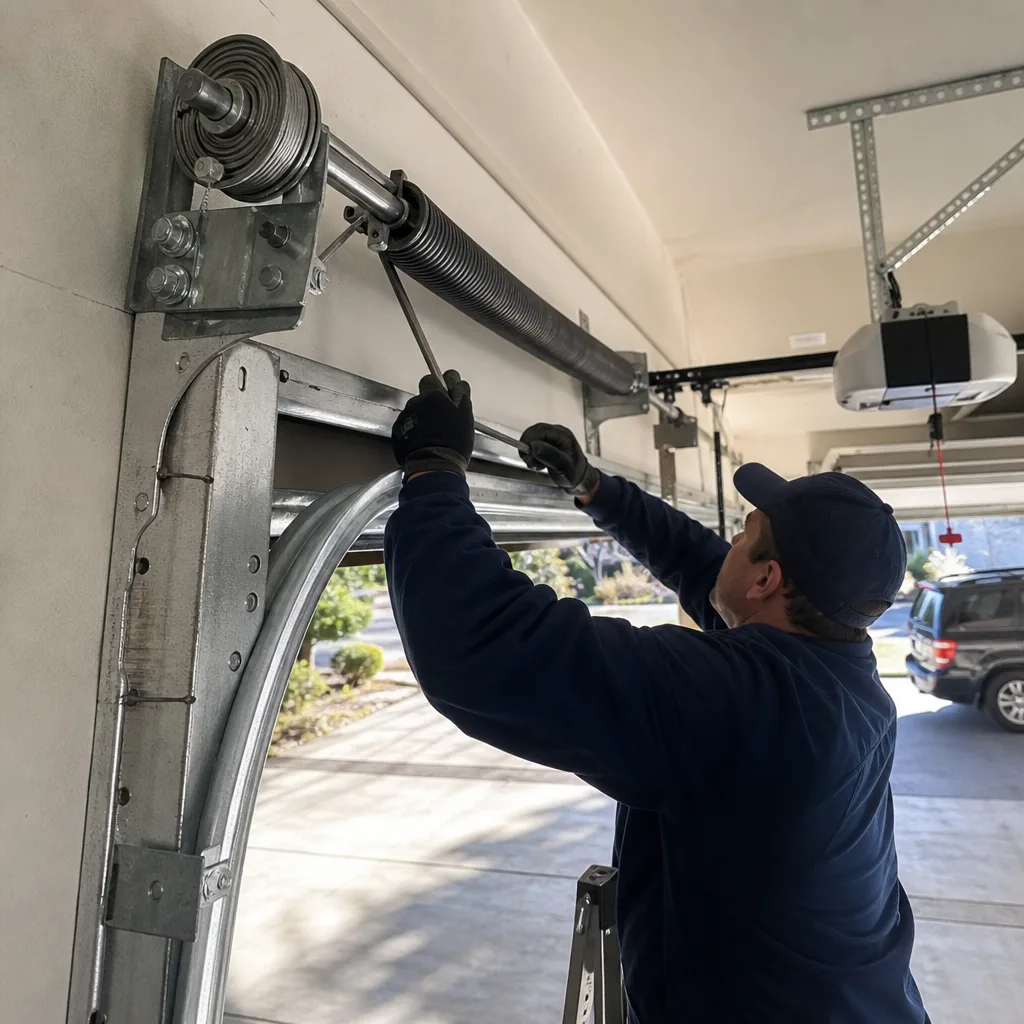
Torsion springs store mechanical energy by twisting. They’re mounted on a steel shaft above the door opening, with one or two springs depending on door width and weight. A standard 16-foot wide door in a Renton home built between 2015 and 2025 typically uses a pair of 0.25-inch wire diameter springs rated for 10,000 cycles. One cycle equals one open and one close.
The spring does the actual lifting. The opener only provides the initial push and controls travel distance. When a torsion spring breaks, you’ll usually hear a loud bang from the garage, and the door will feel impossibly heavy to lift manually. The danger is immediate: a broken torsion spring means the full weight of the door is unbalanced, and attempting to open it can cause the door to crash or the cables to slip off the drums.
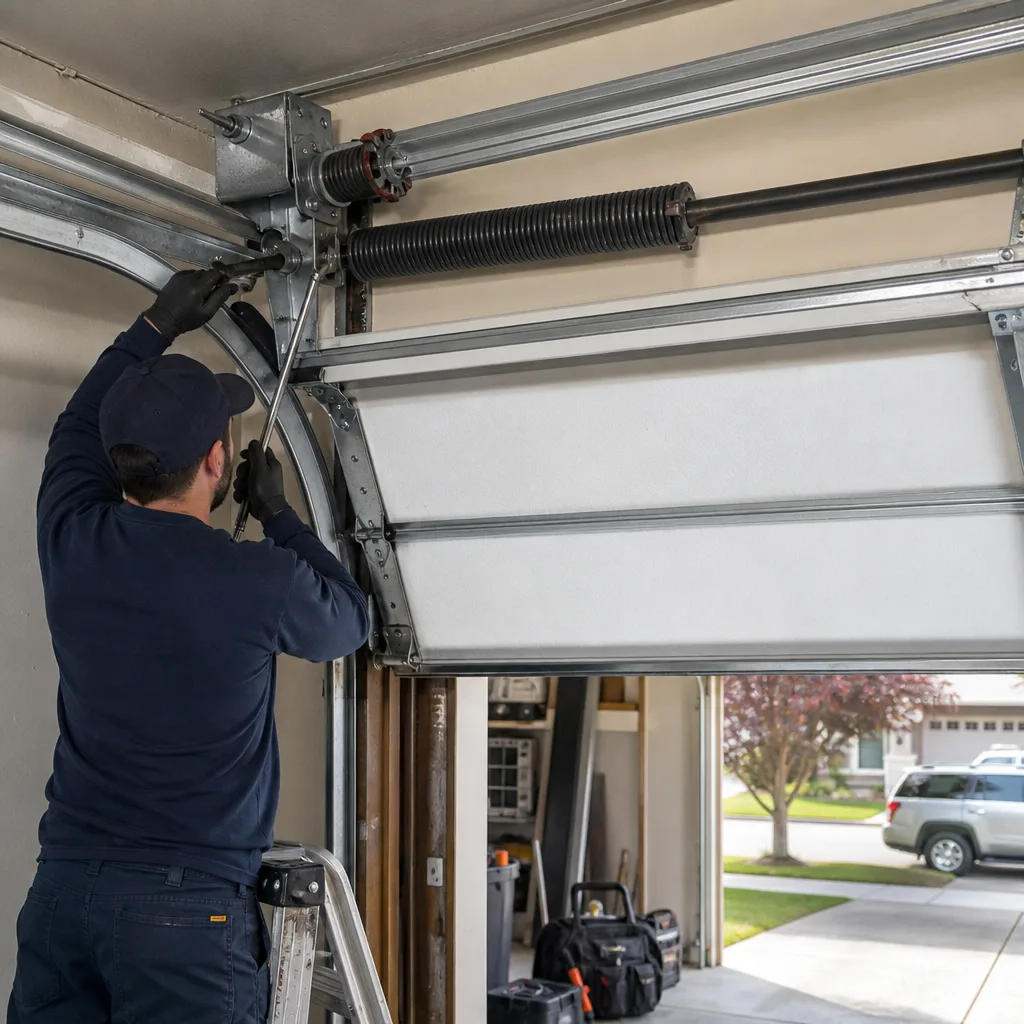
Safety note: Torsion springs are under extreme tension. Do not attempt to wind, unwind, or replace them. The winding bars can slip with enough force to cause serious injury or death. This is not a DIY repair.
Extension Springs
Extension springs stretch and contract along the horizontal tracks on each side of the door. They’re more common on older or lighter doors, and they’re paired with safety cables that run through the spring center to contain it if it breaks. In Renton, we see extension springs most often on doors installed before 2010 in neighborhoods like Kennydale and The Highlands, where the housing stock includes more original construction.
Extension springs are less expensive than torsion springs but wear faster and provide less controlled motion. If your door shakes or jerks during operation, extension springs are a likely culprit.
Cables and Cable Drums
Lift cables attach to the bottom brackets at each lower corner of the door and wind onto grooved drums at the ends of the torsion shaft. The drum’s grooves are engineered to match the door’s lift geometry - as the door rises, the cable winds onto a larger diameter section of the drum, varying the mechanical advantage.
Cable failure usually shows as fraying, kinking, or a clean snap at the bottom bracket attachment point. Drum failure is less dramatic but more insidious: corrosion pits the grooves, causing the cable to slip or wear unevenly. In Renton’s climate, drum corrosion is accelerated by moisture that condenses in the garage during temperature swings, then drips onto the shaft assembly.
Rollers and Hinges
Steel or nylon rollers ride inside the vertical and horizontal tracks. Nylon rollers with sealed ball bearings are quieter and last longer; steel rollers are cheaper but noisier and require more frequent lubrication. Hinges connect the door sections and allow the door to bend around the track radius.
Worn rollers produce a grinding or squealing sound. Failed hinges cause the door to bind in the tracks or sections to separate. On a typical Renton home with a 10,000-cycle spring set, plan to replace rollers at the second spring replacement - roughly year 12 to 15 of service life.
Tracks and Bottom Brackets
The vertical track guides the door from closed to the radius curve; the horizontal track carries it back parallel to the ceiling. Bottom brackets are the anchor points for lift cables and are under full spring tension when the door is closed. They’re stamped with a warning for good reason.
Track damage from vehicle impact is common in Renton’s tighter driveways, particularly in newer developments like Talus where lot sizes are smaller. Bottom bracket corrosion is accelerated by road salt and moisture tracked in on vehicle tires.
Opener Trolley and Carriage
The trolley is the moving component that connects the opener rail to the door’s J-arm. In chain-drive openers (common in Craftsman and older Chamberlain models), the trolley rides a metal chain. In belt-drive models (premium LiftMaster and Raynor lines), a reinforced rubber belt provides quieter operation. The trolley carriage contains a nylon or metal gear that engages the drive mechanism.
Trolley failure produces a running motor with no door movement, or a grinding sound from stripped gears. On a 10-year-old opener, trolley replacement is often economically marginal compared to a full opener replacement with modern safety features.
Photo-Eye Sensors
Two infrared sensors mount 4-6 inches above the floor on either side of the door opening. They create an invisible beam across the door path. If the beam breaks while the door is closing, the opener reverses direction.
Misalignment, dirt accumulation, or moisture intrusion are the usual failures. In Renton, we see moisture issues particularly in unheated garages where condensation forms on the sensor lenses during fall and spring temperature swings. A blinking LED on one sensor usually indicates which side needs attention.
Weather Seals
The bottom seal is a flexible rubber or vinyl strip that compresses against the concrete floor. Side and top seals fill gaps between the door and frame. Their function is thermal, not mechanical, but degraded seals allow water intrusion that accelerates corrosion on every metal component below waist height.
Bottom seals in Renton typically need replacement every 3-5 years, sooner if the driveway slopes toward the door or if the garage floor has settled, creating a gap.
How Renton’s Climate Accelerates Specific Failures
Renton’s location at the south end of Lake Washington creates a microclimate that differs from both Seattle and the Eastside. Winter temperatures oscillate between the low 30s and mid-40s from November through February, with persistent moisture from marine air masses. This specific pattern produces three accelerated failure modes we document regularly.
Cable drum pitting. Temperature swings cause condensation on the cold metal torsion shaft. The moisture collects in the drum grooves, where it mixes with microscopic debris from cable wear. Over five to seven years, this produces pitting that frays cables from the inside out. We see this pattern more frequently in Renton than in drier Eastside markets like Issaquah or Sammamish.
Bottom seal compression set. Cold temperatures stiffen vinyl seals; the repeated compression against concrete when the door closes causes permanent deformation. A seal that no longer rebounds to its original shape leaves a gap for water intrusion. In the Fairwood and East Renton Hill areas, where elevation is slightly higher and overnight lows drop further, this accelerates by roughly one year compared to lakeside neighborhoods.
Photo-eye moisture intrusion. Unheated garages in Renton experience dew point cycling that deposits moisture on sensor housings. Over time, this degrades the internal electronics. We replace more photo-eye pairs in November and March than in any other months, correlating with the strongest temperature swings.
The practical implication: an annual inspection in September, before the wet season, catches corrosion and seal degradation before they cascade into component failures. The cost of a preventive inspection is typically one-third the cost of an emergency spring or cable replacement.
How to Read a Line-Item Repair Quote in King County
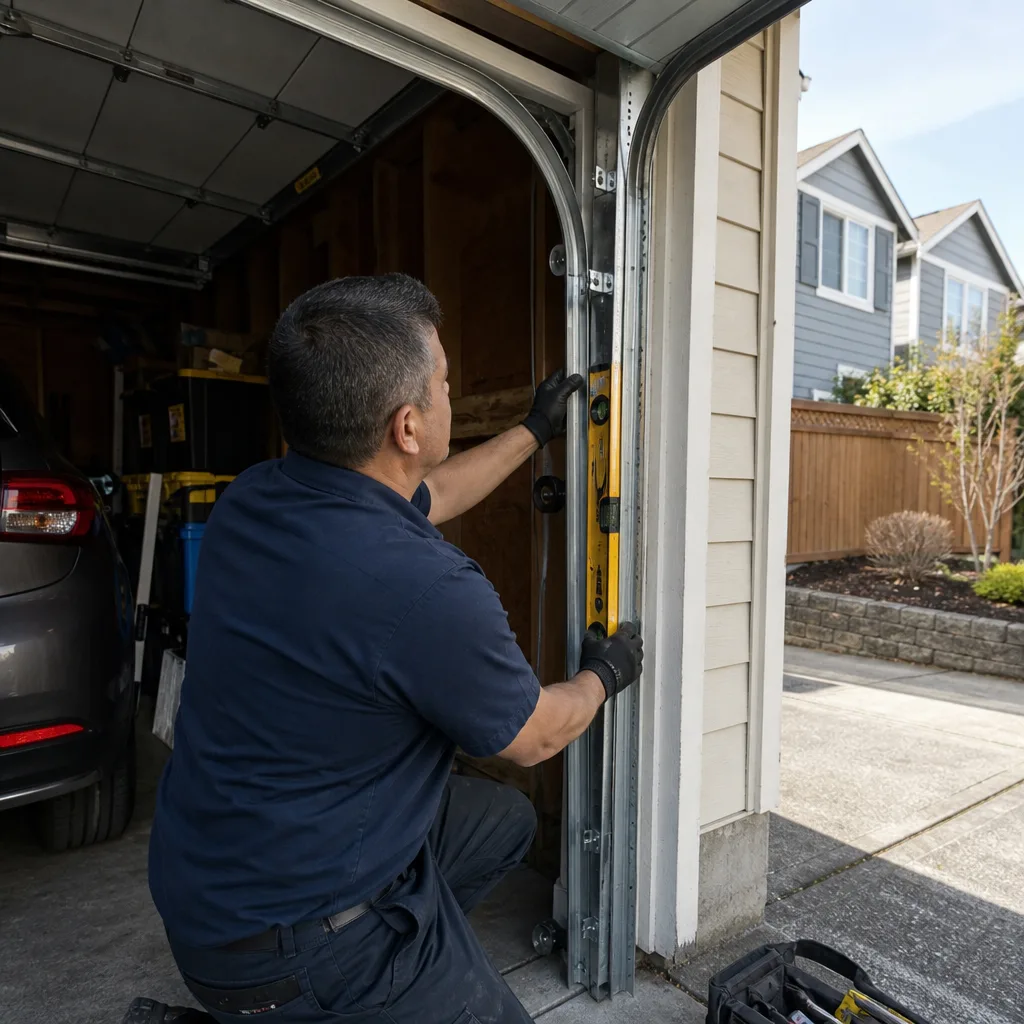
A legitimate garage door repair quote in the Renton market should separate parts, labor, and any trip or diagnostic fees. Here’s what to expect and what to question, including how Garage Door Permits, Codes & Inspections in WA: What You Need to Know may apply to larger jobs.
| Component | Typical Parts Range (King County) | Typical Labor Range | Notes |
|---|---|---|---|
| Torsion spring (pair, standard door) | $80 – $160 | $120 – $220 | Includes winding, balance, safety check |
| Extension spring (pair) | $40 – $80 | $100 – $180 | Includes safety cable inspection |
| Lift cable (pair) | $30 – $60 | $80 – $140 | Lower if bundled with spring replacement |
| Cable drum (pair) | $50 – $100 | $100 – $160 | Verify if shaft bearings included |
| Bottom bracket (pair) | $25 – $50 | $80 – $120 | Requires spring release; not a minor repair |
| Nylon roller set (10-12) | $60 – $120 | $100 – $160 | Sealed bearing rollers at higher end |
| Opener trolley/carriage assembly | $40 – $90 | $100 – $160 | Consider full opener replacement if 10+ years |
| Photo-eye sensor pair | $40 – $80 | $60 – $100 | Universal vs. brand-specific pricing varies |
| Bottom weather seal | $25 – $50 | $60 – $100 | T-channel vs. bulb seal type affects price |
Markup on hardware in the King County market typically runs 50-100% over wholesale cost. This covers inventory carrying, warranty administration, and the risk of ordering wrong parts. A quote with parts at retail or near-retail pricing is not necessarily inflated; a quote that won’t itemize parts and labor is a red flag.
At Servo Garage Doors Renton, we deliver a flat, written price and written scope before any work starts - Clause 1 of The Haven Standard. The price you approve is the price on the invoice. No post-work additions for “discovered problems” that weren’t in the original scope.
The Documented Photo-First Standard
The garage door repair industry has a documentation problem. Most homeowners receive a verbal diagnosis, a handwritten total, and no record of what was supposedly wrong. When the same symptom returns three months later, there’s no evidence to compare.
Clause 4 of The Haven Standard exists because of this problem. Here’s how it works in practice:
- The technician arrives and listens to the symptom description.
- Before touching tools, the technician inspects each component in the operating sequence.
- The failed component is photographed in place, with context showing its location in the system.
- The photograph is shown to the customer before any quote is prepared.
- The written quote references the photographed component by name and location.
- After repair, the replaced component is photographed again, and the completed work is documented.
- The customer receives both photographs and the written scope as a permanent record.
This is not customer service theater. It’s evidence. A photograph of a torsion spring with a clean coil break, showing 0.25-inch wire diameter and 2-inch inner diameter, lets you verify that the quote matches the actual failure. If another company later claims “both springs were bad,” you have dated documentation of what was actually replaced.
We’ve provided this record on every job since 2015. It’s the founding rule Servo was built on, and it’s why we can offer a Free Second Opinion on any competing written estimate: bring the paperwork, and we’ll show you what the documentation should have included.
When Repairs Stop Making Sense: The Cost-Per-Year Method
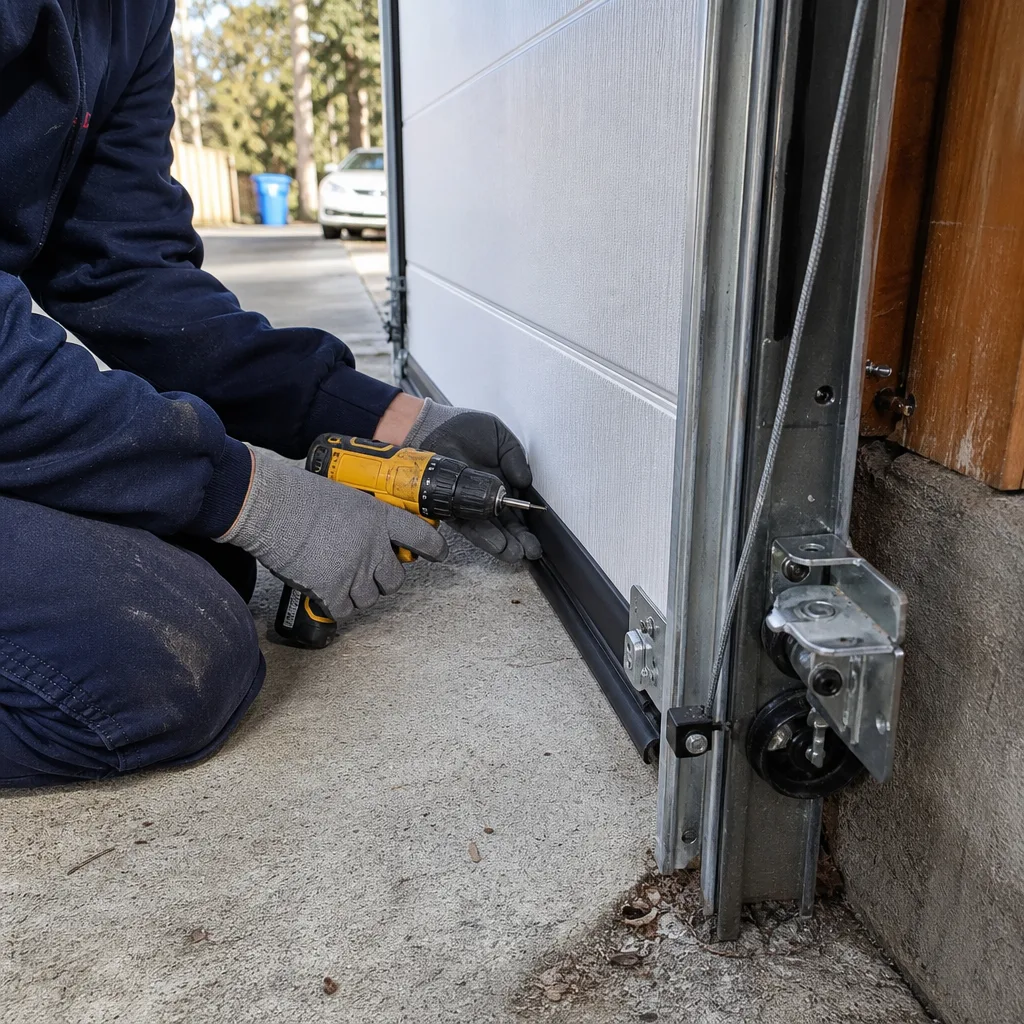
There’s a specific age and repair history where continuing to fix a garage door costs more than replacing it. The calculation is straightforward, but most homeowners never see it laid out.
Here’s the method. Take the door’s original installed cost (or a current replacement quote), divide by 25 years for the expected service life of a steel door, and you have a baseline cost-per-year of $0 to $120 for a typical $2,000-$3,000 door. Each repair adds to the actual cost. When cumulative repairs exceed 50% of replacement cost and the door is past 15 years, replacement typically pencils out.
Example from a Renton home in the Benson Hill area, 2007 construction, original door:
- 2019: Spring replacement, $280
- 2021: Cable and roller replacement, $340
- 2023: Bottom bracket and seal replacement, $290
- 2024: Opener replacement (separate system, but related labor), $650
- 2025: Second spring replacement, $320
Cumulative repair: $1,880. Replacement quote in 2025: $2,400. The door is 18 years old. Cost-per-year if replaced now: $2,400 / 25 = $96/year. Cost-per-year if repaired again: ($1,880 + $320) / 18 = $122/year, with declining component reliability and no warranty on the door panels themselves.
The threshold isn’t precise, but the direction is. At 15 years with two major repairs, start getting replacement quotes. At 20 years with any significant repair, replacement is usually the better financial decision. Garage Door Installation in Renton provides current pricing and options for steel, insulated, and composite doors.
Garage Door Openers: Repair, Replace, or Upgrade
The opener is technically separate from the door system, but it’s purchased and serviced together often enough that it belongs in this guide. Here’s how to think about the decision.
Repair when: The opener is under 8 years old, the failure is a specific component (trolley carriage, limit switch, logic board), and the repair cost is under 40% of replacement. Common repairable failures in LiftMaster and Chamberlain chain-drive units include stripped nylon gears in the trolley and failed capacitor starts. Raynor-branded openers, which are manufactured by Chamberlain with specific feature sets, share most internal components.
Replace when: The opener is over 12 years old, has required two repairs in three years, or lacks modern safety features. Pre-2018 openers may not have rolling-code security (which prevents code-grabbing remotes) or force-sensing reversal (which detects obstruction better than the older contact-reversing systems).
Upgrade considerations: Belt-drive openers reduce noise by 10-15 decibels, significant if the garage is beneath a bedroom. Battery backup is now required by Washington state law for new installations, and it’s worth adding on replacement. WiFi connectivity (MyQ on Chamberlain/LiftMaster) lets you monitor and operate the door remotely, though we find most Renton homeowners use this feature less than expected after the novelty fades.
Garage Door Opener Repair & Installation in Renton covers current models, features, and pricing for replacement scenarios.
A Realistic Maintenance Schedule for Renton Homes
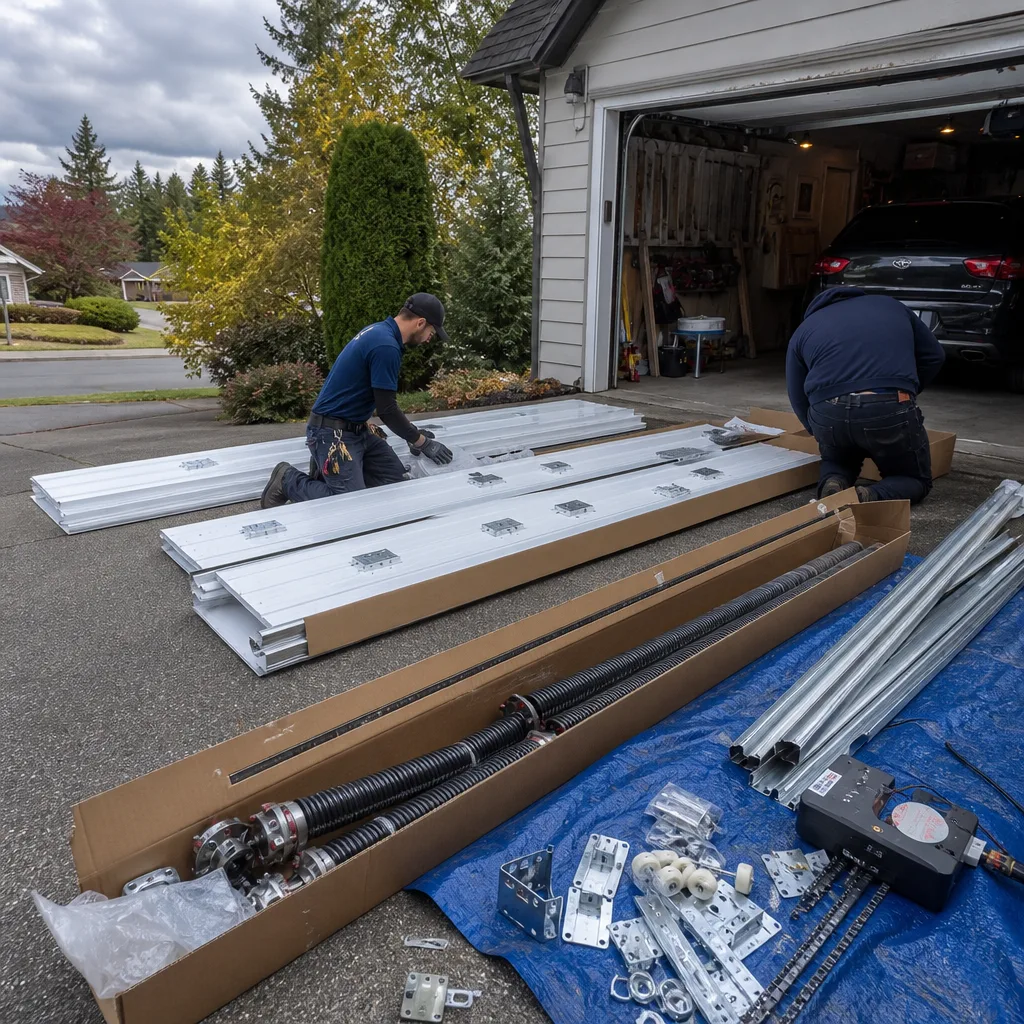
Annual professional inspection catches the climate-accelerated failures specific to this market. Between inspections, two homeowner tasks prevent most emergency calls.
Monthly: Visual inspection of cables for fraying, springs for coil gaps or rust, and rollers for wobble or binding. Run the door manually (disengage the opener first) - it should move smoothly and stay open at waist height. If it drifts down, the springs need adjustment.
Quarterly: Lubricate the torsion spring with a silicone-based spray (not WD-40, which attracts dirt). Wipe photo-eye lenses. Check the bottom seal for compression set or tearing.
Annually (September, before wet season): Professional inspection including spring tension measurement, cable drum corrosion check, track alignment, opener force settings, and safety reversal test. The cost in the Renton market runs $89-$149, and it typically prevents one emergency call every three to four years.
We document the inspection with the same photo record as repairs, so you have year-over-year comparison if questions arise.
Common Mistakes to Avoid
- Replacing the opener when the spring failed. A door that won’t open with the remote but feels heavy to lift manually has a spring problem, not an opener problem. Opener replacement won’t fix it and costs 3-4x more.
- Ignoring a frayed cable. Cables fail progressively - a few frayed strands become many, then sudden snap. The door drops unevenly, which can twist the track or damage sections. A $60 cable replacement prevents a $400 track-and-section repair.
- DIY spring replacement after watching a video. The torque in a wound torsion spring can generate lethal force. Every year, emergency rooms in King County treat injuries from this specific mistake. The savings of doing it yourself are negative if you include hospital bills.
- Accepting a quote that doesn’t itemize parts and labor. A single total with no breakdown prevents you from verifying reasonable markup or comparing to the ranges above. It’s also the structure most associated with post-work price increases.
- Replacing one spring when two are installed. Torsion springs are matched pairs. Replacing one leaves the other with different fatigue characteristics, guaranteeing imbalance and early failure of the new spring. Any technician who suggests this is cutting corners.
- Neglecting the bottom seal until water enters the garage. In Renton’s wet winters, a failed seal channels water directly to the bottom brackets and lower track, accelerating corrosion on load-bearing components. Seal replacement is preventive maintenance, not cosmetic.
- Calling for “a garage door tune-up” without specifying symptoms. Vague requests invite vague work and vague billing. Note the specific symptom - noise, slow operation, reversal, manual heaviness - so the technician can target the inspection and quote accurately.
When to Call a Professional
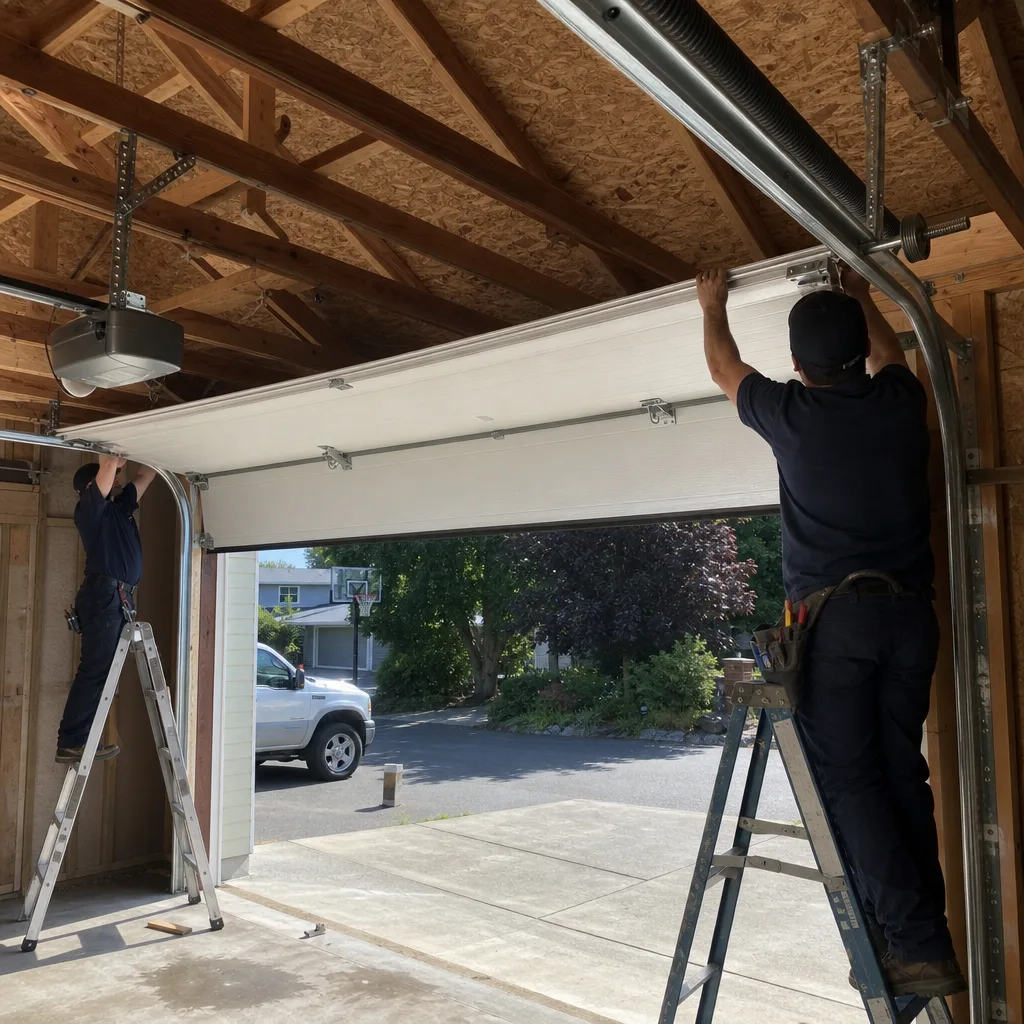
Call a technician for any spring or cable issue, any door that won’t stay open manually, any grinding or binding in the tracks, or any opener that runs without moving the door. These are not diagnostic challenges for a homeowner; they’re safety hazards that require proper tools and training.
For routine concerns - weather seal replacement, photo-eye alignment, remote programming - a professional visit ensures the work is documented and warranted. Garage Door Repair in Renton covers our full diagnostic and repair process.
Servo Garage Doors Renton offers free estimates in Renton - call (253) 518-3767. Every estimate includes a written, flat price before any work starts, per Clause 1 of The Haven Standard. Emergency calls are answered by a live person, 24/7, with a named technician and an on-the-way text.
Frequently Asked Questions
Most common repairs in Renton fall between $180 and $520, with torsion spring replacement at the lower end and opener component replacement at the higher end. Cable-only repairs typically run $110-$200. The exact price depends on door size, component type, and whether multiple related parts need attention. Call (253) 518-3767 for a free written estimate - estimates are free and include the documented photo record.
A broken torsion spring produces a loud bang from the garage, often mistaken for a vehicle backfire, and the door becomes extremely heavy to lift manually. If you have an automatic opener, the motor may run but the door won’t move, or it may lift a few inches and stop. Look above the door for a visible gap in the spring coil. Do not attempt to open the door or release the opener - the unbalanced weight is dangerous. Call a technician.
A steel garage door with standard 10,000-cycle springs lasts 20-25 years in Renton with proper maintenance, though the wet winters typically require cable drum inspection at year 7 and bottom seal replacement every 3-5 years. The door panels themselves rarely fail; it’s the operating components that determine useful life. Annual professional inspection starting at year 5 extends component life by catching corrosion before it cascades.
A legitimate tune-up includes spring tension verification and adjustment, cable and drum inspection, roller and hinge lubrication, track alignment check, opener force and safety reversal testing, and photo-eye alignment and cleaning. It should produce documentation of findings, not just a receipt. Be wary of “tune-up” offers below $79 - they often serve as entry points for unnecessary upsells. At Servo, we document every tune-up with the same photo record as repairs.
Yes. The opener is a separate system that attaches to the door via the J-arm or drawbar. Any modern opener can be adapted to any properly balanced sectional door. Replacement makes sense when the opener is over 12 years old, has required multiple repairs, or lacks battery backup (now required for new installations in Washington). A new opener on a 15-year-old door is economically sound; a new opener on a 20-year-old door with worn components is putting a new motor on a failing chassis.
The most common cause is misaligned or dirty photo-eye sensors. Check that both sensor LEDs are solid (not blinking), clean the lenses with a soft cloth, and verify nothing blocks the beam path. If the sensors are aligned and the problem persists, the opener’s close-force setting may need adjustment, or the door may be binding in the tracks from worn rollers or track damage. Force adjustment and track diagnosis require professional tools - incorrect adjustment can create a crushing hazard.
Chain-drive openers use a metal chain to move the trolley, producing more noise but handling heavier doors at lower cost. Belt-drive openers use a reinforced rubber belt, operating 10-15 decibels quieter with slightly higher upfront cost. For a garage beneath a bedroom or living space in Renton’s denser neighborhoods like Downtown or the Landing, belt-drive is usually worth the difference. Both types are available with identical feature sets from LiftMaster and Chamberlain.
The Bottom Line
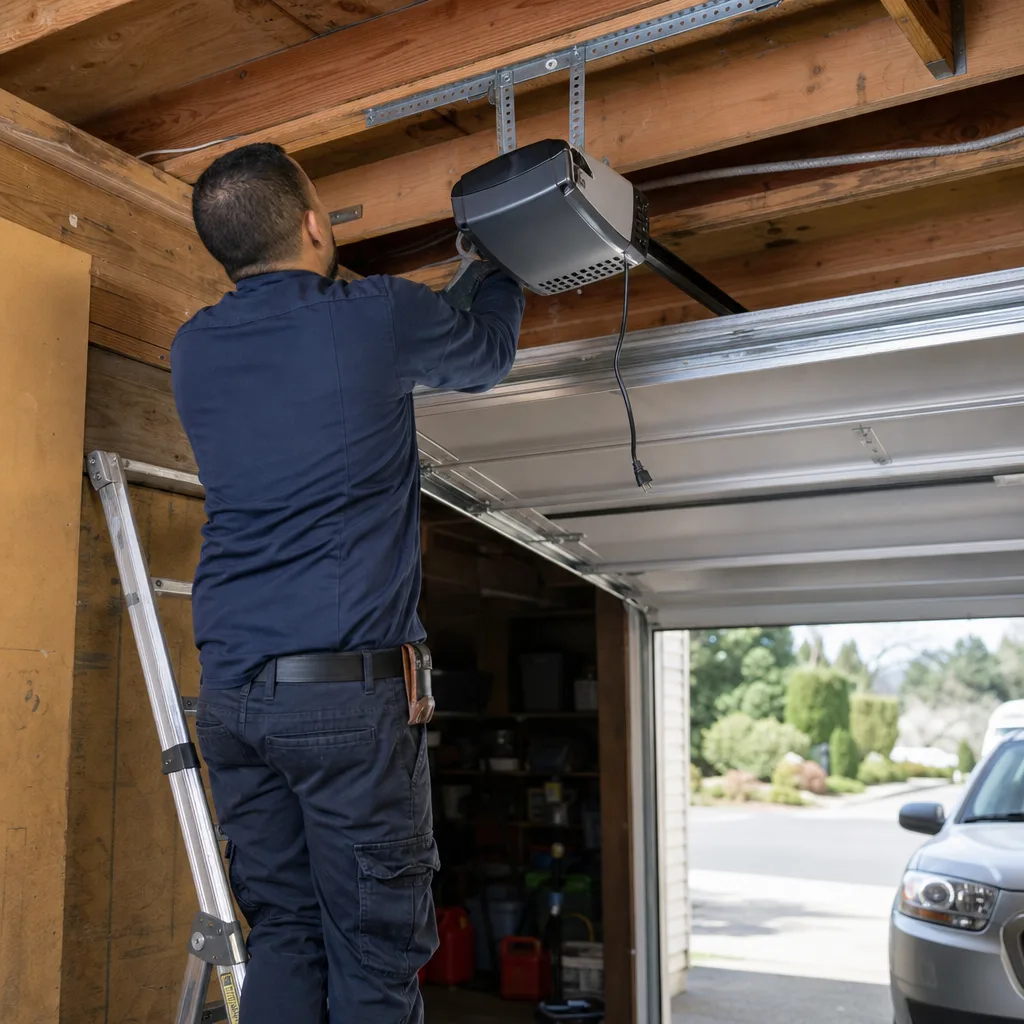
A garage door is eight interdependent components, not a single product, and understanding which component failed saves you from paying to replace the wrong one. In Renton, wet winters and temperature swings accelerate corrosion on cable drums and bottom seals, making annual September inspection particularly cost-effective. Read every quote for parts-labor separation and reasonable markup. Demand documentation - photographs of the failed component, a written scope, a flat price approved before work starts. Know the cost-per-year threshold where replacement beats successive repairs. And never attempt spring or cable work yourself; the risk is not proportional to the apparent simplicity.
Written by Marcus Deller, Owner at Servo Garage Doors Renton, serving Renton since 2015.