
Last updated September 21, 2026
Full 25-point door and opener safety check with every visit - springs, cables, rollers, tracks, and your LiftMaster or Chamberlain opener included
You get a price before we start. It does not change when the truck arrives.
 Before
 After
After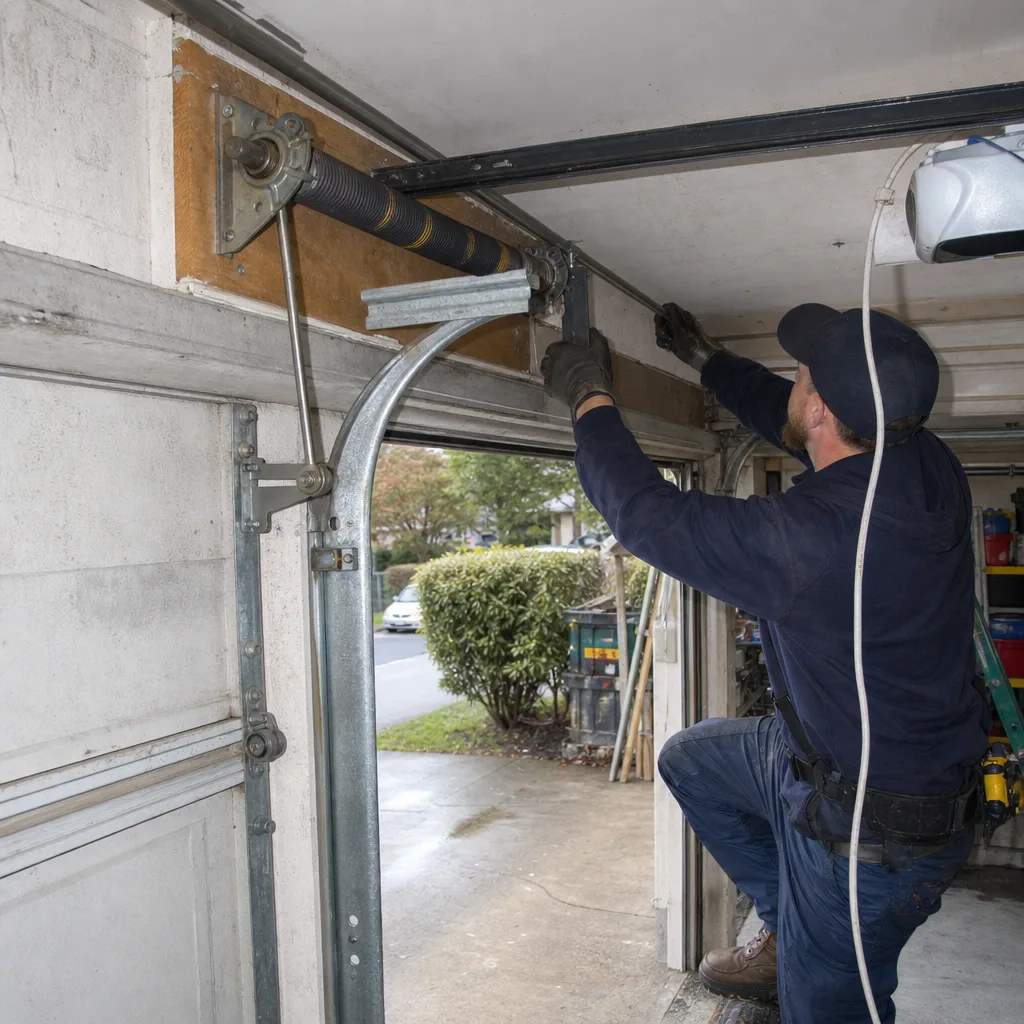 Before
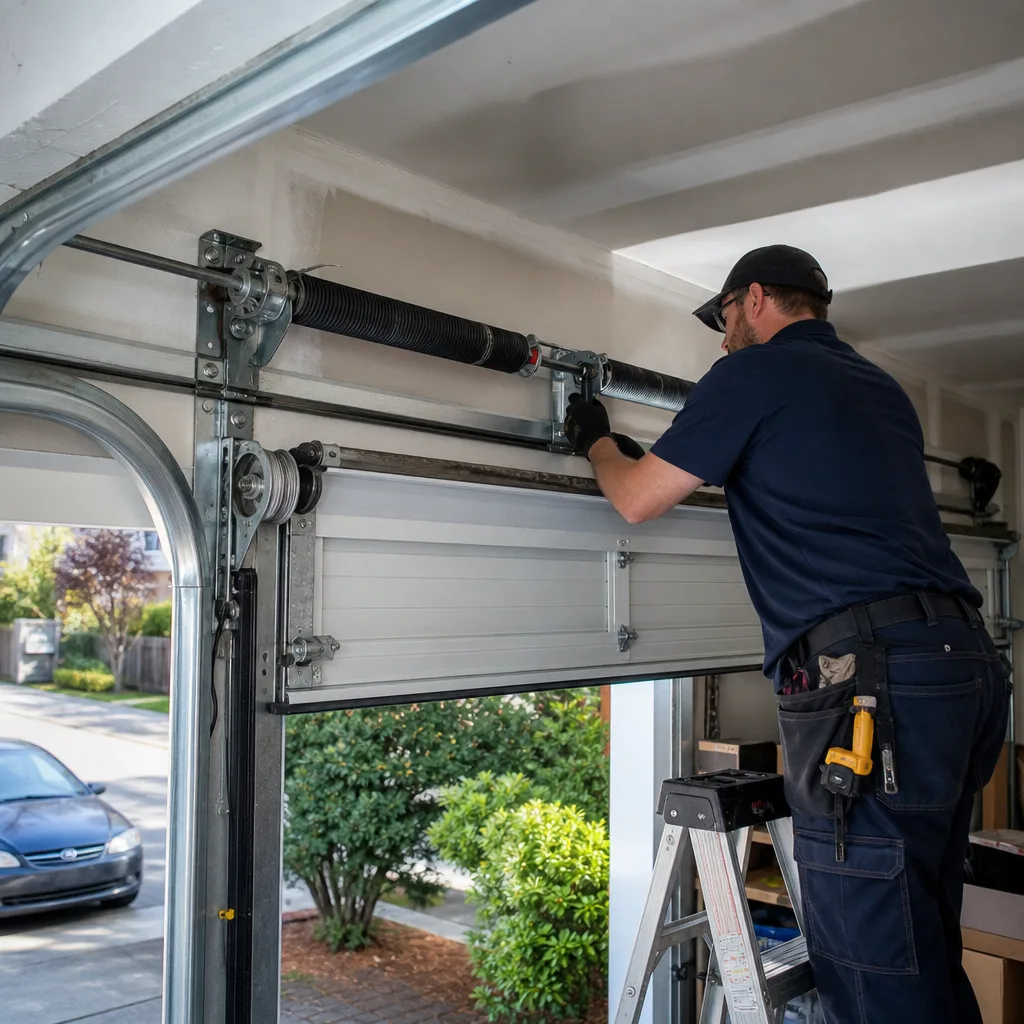 After
After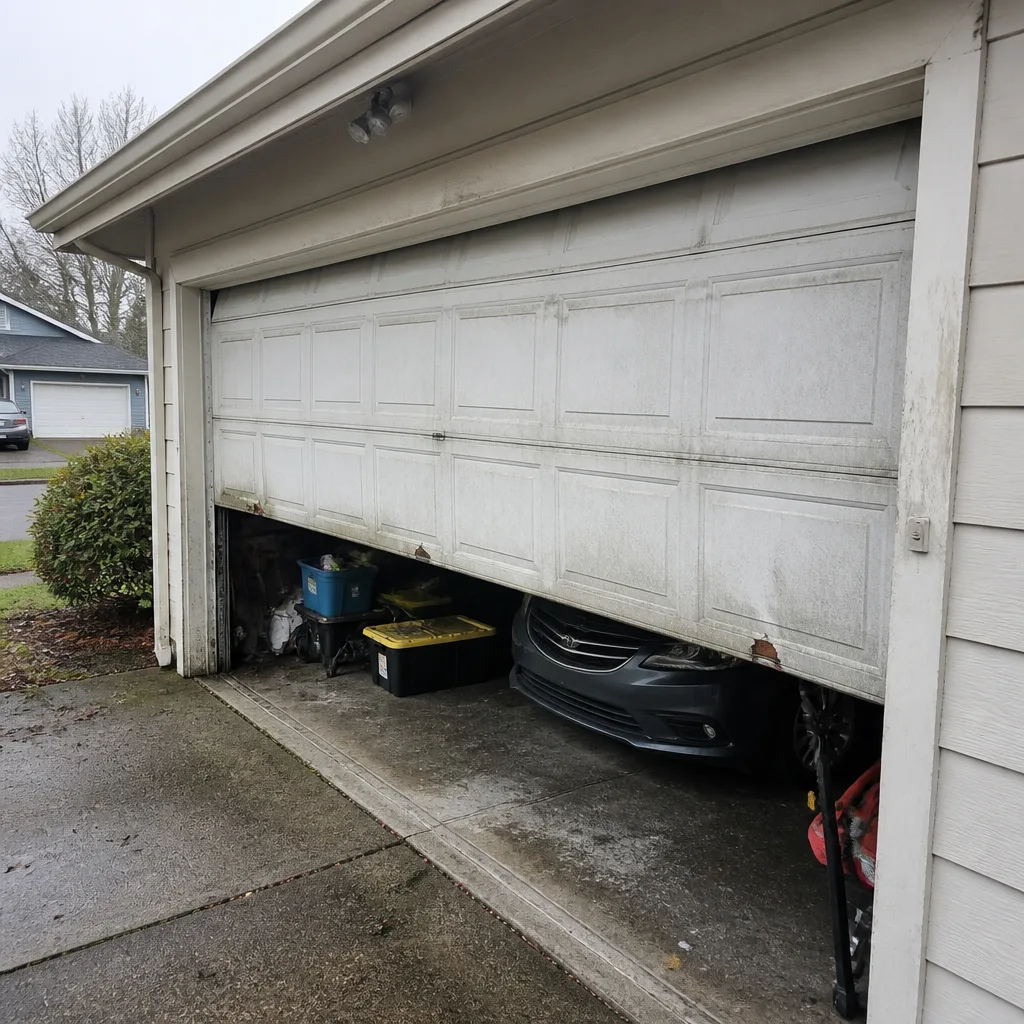 Before
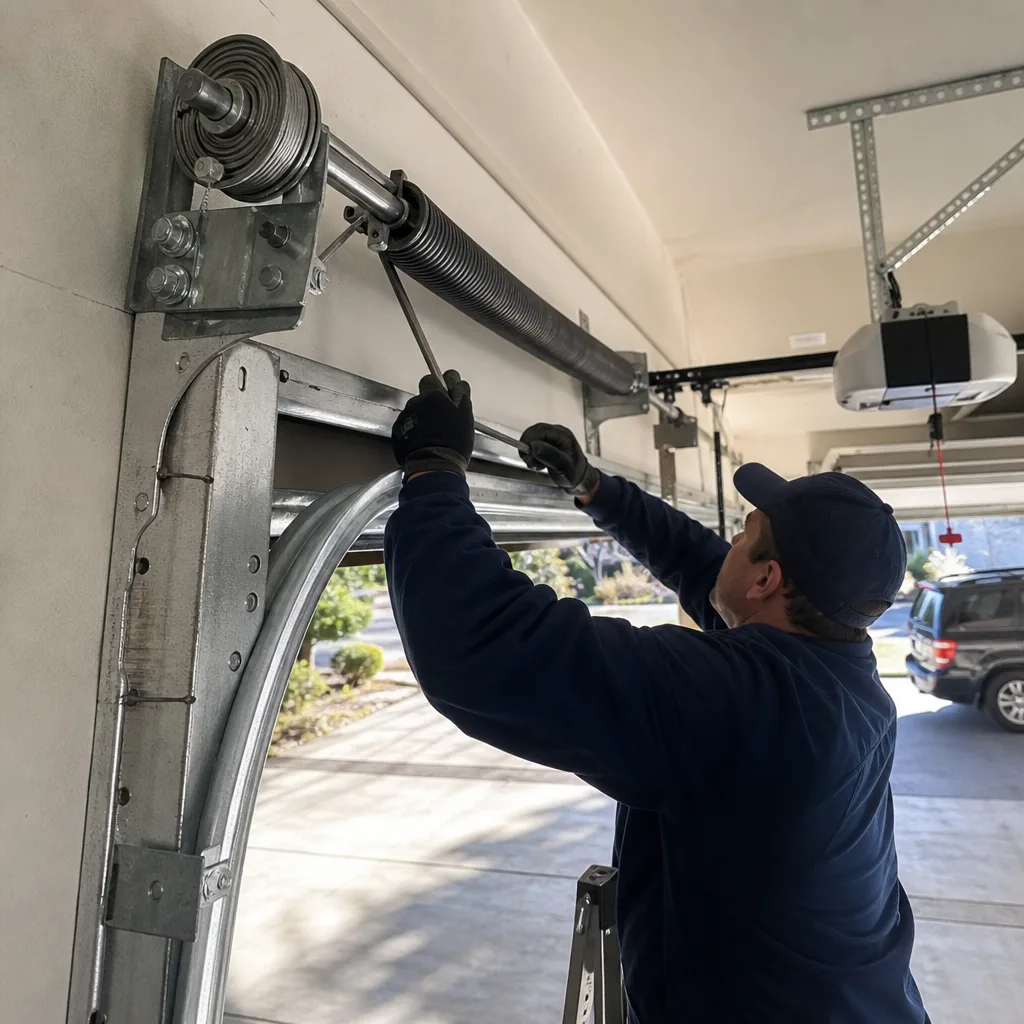 After
AfterGarage Door Permits, Codes & Inspections in WA: What You Need to Know
Most homeowners in Renton assume every garage door replacement requires a permit. That assumption costs time and money. In Washington State, replacing a door with the same size, type, and wind-load rating in the same rough opening is classified as “like-for-like replacement” under the International Residential Code, and it typically does not trigger a permit requirement. The problem starts when a homeowner widens the opening, changes from a sectional to a roll-up door, or installs a new header. That four-inch expansion turns a simple swap into a structural alteration, and skipping the permit can mean a stop-work order, a tear-down of finished work, and a title complication that surfaces when you sell. This guide explains exactly where Washington draws the line, what a permit costs in Renton, and how the documentation protects your investment, and you can find more guides & resources on our blog.
Quick Answer
In Washington State, garage door replacement in kind - same size, same type, same opening, no structural changes - generally does not require a permit. Any alteration to the rough opening, header, or wind-load rating triggers a residential building permit under the Washington Residential Code, with inspection required before the job is closed. In Renton, this permit runs approximately $200-$400 depending on valuation, with review typically taking 3-5 business days.
Table of Contents
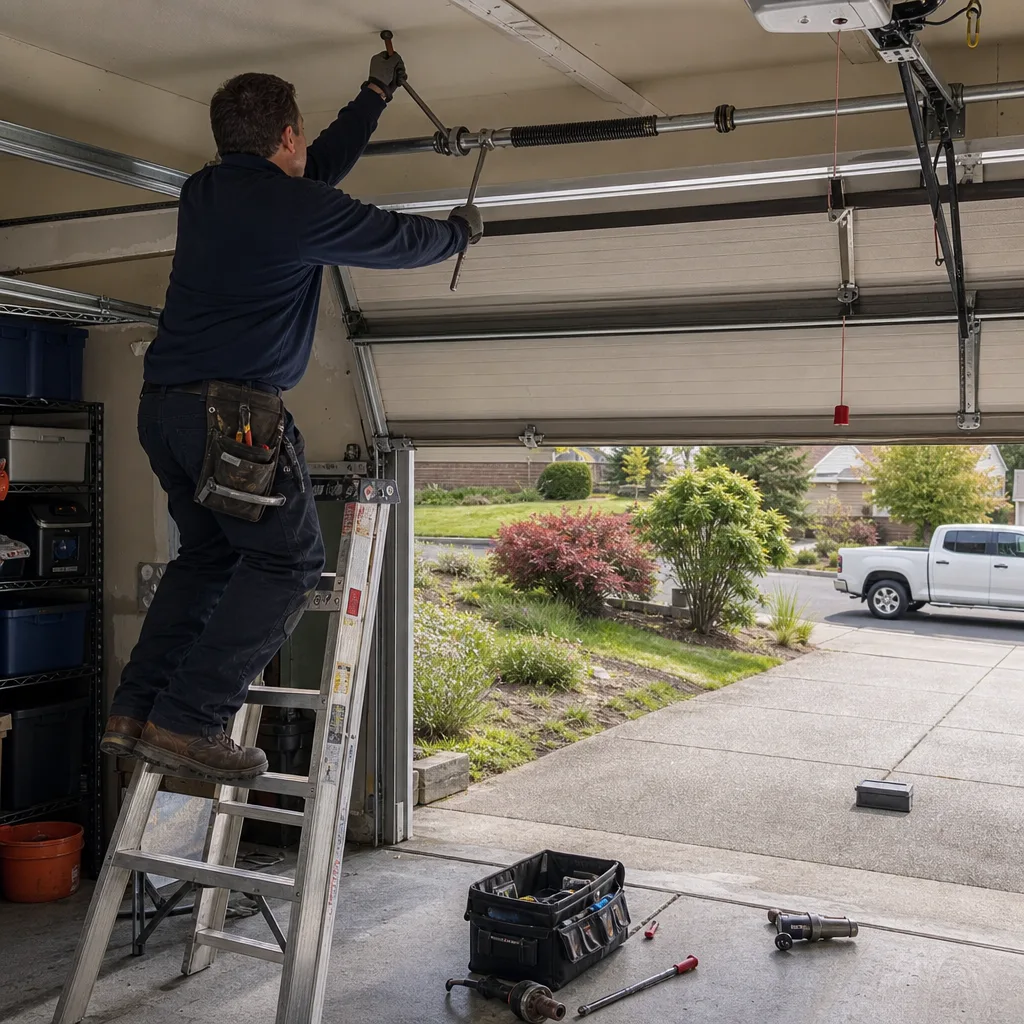
- Like-for-Like Replacement vs. Structural Alteration
- The Renton Permit Process: Fees, Timelines, and Inspections
- Wind Load Requirements and Older Homes
- Why a Permit Record Has Dollar Value at Sale or Claim
- Who Pulls the Permit, Who Is Liable
- After-the-Fact Permits: Cost and Consequences
- Common Mistakes to Avoid
- When to Call a Professional
- Frequently Asked Questions
 Before
 After
AfterLike-for-Like Replacement vs. Structural Alteration
The International Residential Code, adopted by Washington State as the Washington Residential Code, distinguishes between maintenance, repair, and replacement in kind versus alterations that affect structural elements. This distinction determines whether you walk into Renton City Hall or simply schedule your installer.
Like-for-like replacement means the new door matches the old door in all material respects: width, height, door type (sectional, roll-up, swing-out), track configuration, and wind-load rating. The existing rough opening, header, and jambs remain untouched. Under IRC R105.2 and the Washington State amendments, this work is exempt from permit requirements as ordinary repair and maintenance.
We’ve performed thousands of these replacements across Renton, from the ranch homes near Kennydale to the newer construction in Talbot Hill. In nearly every case, no permit was required. The technician measures the existing opening, confirms the header is not modified, and proceeds under Clause 1 of The Haven Standard with a flat, written price before any work starts.
Structural alteration triggers the permit requirement. This includes:
- Widening or heightening the rough opening
- Replacing or modifying the header above the door
- Changing door type (for example, from sectional to roll-up, which alters track loads and header requirements)
- Installing a door with a higher or lower wind-load rating than the original in a way that affects structural calculations
- Converting a window or carport opening into a garage door opening
- Any work affecting fire-rated assemblies in attached garages
The 2018 Washington Residential Code, effective statewide, incorporates the 2015 IRC with state amendments. Section R105.1 requires a permit for “construction, alteration, movement, enlargement, replacement, repair, equipment, use and occupancy, location, removal and demolition of any building or structure.” The exemption in R105.2 for “ordinary repairs” does not apply when structural, mechanical, or fire-resistance elements are involved.
For Renton homeowners, the practical test is simple: if a saw touches the framing, you likely need a permit. Watch for Garage Door Warning Signs: A Renton Homeowner’s Reference Guide to spot other red flags early. If the technician is unbolting an old door and hanging a new one in the same hole, you likely do not.
The Renton Permit Process: Fees, Timelines, and Inspections
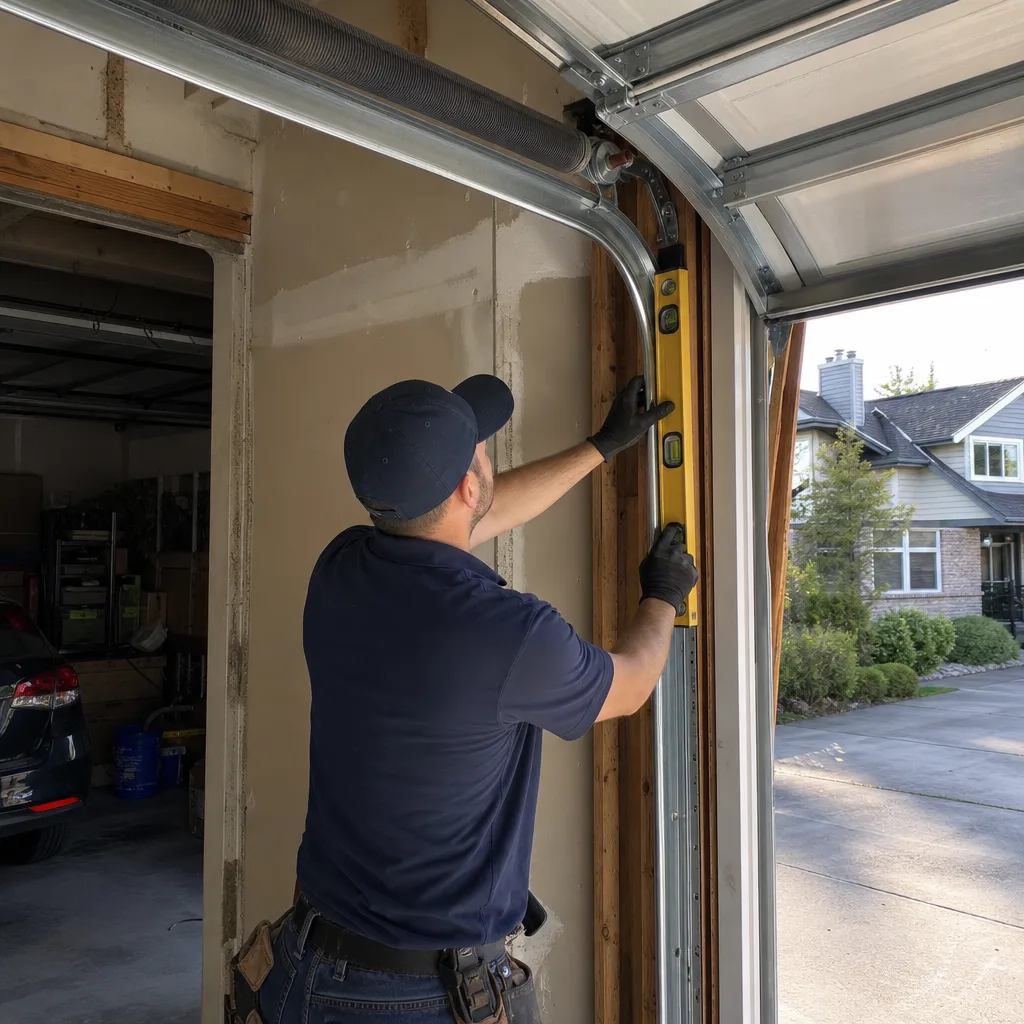
Renton operates its own building division under the Community and Economic Development Department, with permits issued through the Renton Permits Portal. Understanding the actual process, with real numbers and timelines, helps homeowners plan and budget accurately.
Step-by-step permit application for residential garage door alterations:
- Prepare drawings. Submit scaled drawings showing the existing and proposed conditions, including header size, jack stud configuration, and connection details. For simple alterations, a site plan and two elevation drawings typically suffice.
- Complete the application. The online portal requires project valuation, contractor information (if applicable), and a description of work. Homeowners may act as their own contractors on single-family residential work.
- Pay fees. Renton’s fee schedule combines a plan review fee with an issuance fee based on project valuation. For typical garage door alterations valued under $5,000, total fees generally fall in the $200-$400 range. The plan review fee is approximately $100-$150; the building permit fee adds roughly $100-$250 depending on valuation.
- Wait for review. Residential alterations typically undergo review within 3-5 business days if the submittal is complete. Complex projects or incomplete applications extend this timeline.
- Receive permit and schedule inspection. The issued permit includes an inspection card listing required inspections. For garage door alterations, this typically means a framing inspection (if the header was modified) and a final inspection.
- Pass inspection and receive approval. The passed inspection record generates a Certificate of Completion or equivalent documentation, which becomes part of the property’s permit history.
What does a passed inspection record look like? It is a dated, public document accessible through Renton’s permit search system, showing the permit number, scope of work, inspection dates, inspector initials, and status. This is not a private contractor’s warranty. It is a municipal verification that the work met code at the time of inspection.
We’ve guided customers through this process when their projects crossed the alteration line. Our documentation system, including the photo record of existing conditions delivered under Clause 4 of The Haven Standard, often helps the homeowner or their architect demonstrate compliance intent during review.
Wind Load Requirements and Older Homes
Washington’s adopted building code includes wind load provisions that affect garage door selection, particularly for homes built before the 2012 International Building Code adoption. This is where many homeowners, and some contractors, stumble.
The 2012 IBC and IRC introduced more stringent wind load requirements for garage doors in high-wind regions. Washington State, while not a hurricane zone, includes areas with design wind speeds sufficient to trigger these provisions. More critically, the code requires that replacement doors in existing structures meet the wind load requirements of the current code when the replacement is “part of a structural alteration” - the same trigger that requires a permit.
For attached garages, the door is often part of the home’s pressure envelope. A door with inadequate wind resistance can fail in a severe storm, pressurizing the garage and potentially lifting the roof. This is not theoretical. In our work across Renton, particularly in the hilltop neighborhoods above Lake Washington where wind exposure is higher, we’ve encountered original doors from the 1970s and 1980s with no rated wind load whatsoever.
The practical implications:
- Homes built before 2012 may have doors with no wind-load rating or a rating below current standards
- If your replacement is in-kind, the existing rating (or lack thereof) generally carries forward
- If your replacement involves structural alteration, the new door must meet current wind-load requirements for your specific location and exposure
- Manufacturers like Clopay, Amarr, and Wayne Dalton publish wind-load ratings by door model and size; we verify these against the project’s requirements before quoting
For a typical Renton home at modest elevation, a 20 PSF wind-load rating often satisfies current requirements. For homes on exposed ridges or with large door openings, the requirement may increase to 25-30 PSF or higher. The only way to know is to check the specific address against the wind speed map in ASCE 7, referenced by the Washington Residential Code.
When we quote a door replacement that triggers permit requirements, we specify the required wind-load rating in the written scope, with manufacturer documentation attached. This becomes part of the permit submittal and the inspection record. No guesswork, no callback.
Why a Permit Record Has Dollar Value at Sale or Claim
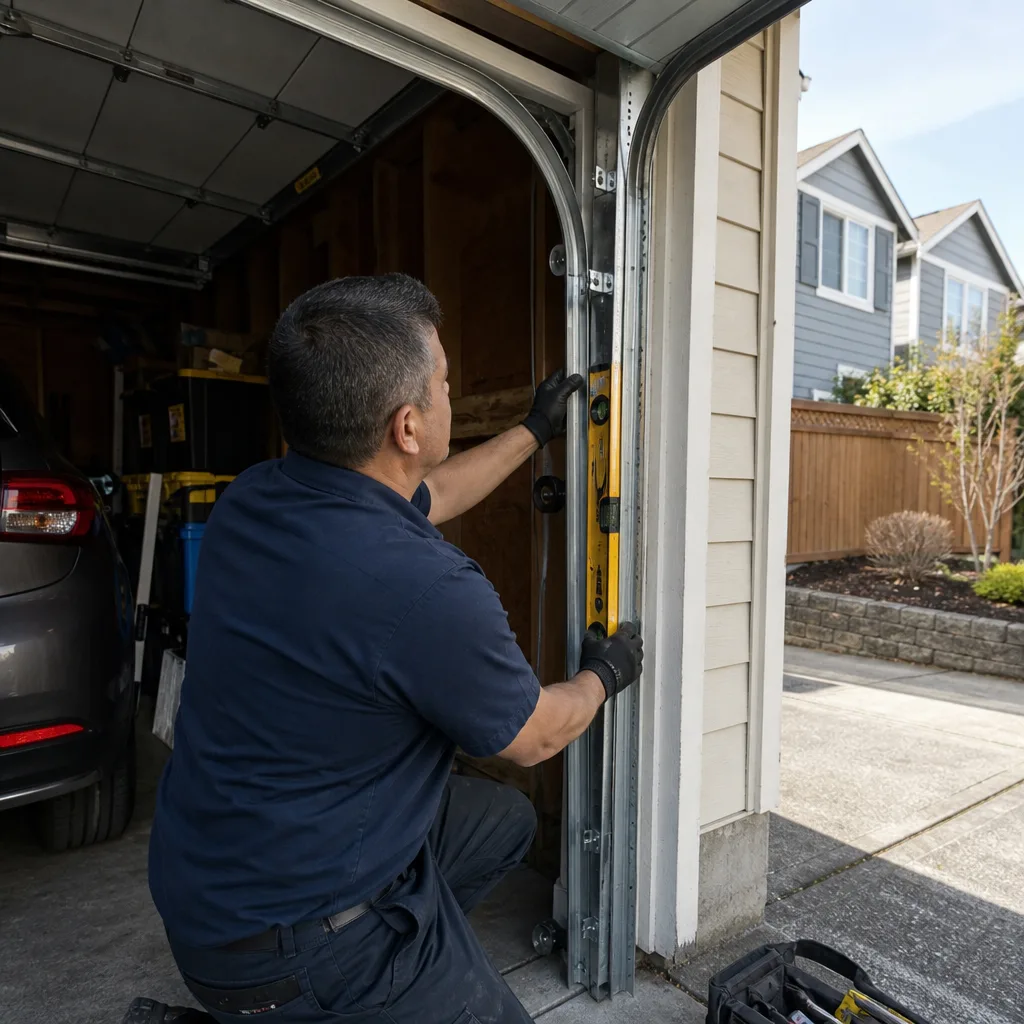
A permit is not merely bureaucratic compliance. It is a dated, public record of code-compliant work that creates tangible financial protection in two scenarios: property sale and insurance claims.
At sale: Washington State’s seller disclosure form (Form 17 under RCW 64.06) requires disclosure of “material facts” affecting the property, including work performed without required permits. A buyer’s title company or lender may flag unpermitted structural work, triggering renegotiation, repair requirements, or deal cancellation. In competitive markets, this can cost thousands or kill the sale entirely. A clean permit record, by contrast, verifies compliance and moves closing forward.
We’ve heard from Renton homeowners who learned of permit gaps only when the buyer’s inspector found header work with no corresponding permit history. The retrospective permit application, discussed below, cost more than the original work would have with proper permitting.
At claim: Insurance policies contain exclusions for losses resulting from faulty, inadequate, or illegal construction. If a garage door failure causes property damage or injury, and the insurer discovers the installation lacked required permits, coverage denial becomes likely. The permit record shifts burden of proof: the work was inspected and approved by the authority having jurisdiction.
The documented photo record we provide under Clause 4 of The Haven Standard adds a secondary layer. While not a permit, it establishes the condition of components at time of service, the work performed, and the state of completion. Combined with a permit record, this documentation creates a defensible paper trail that generic contractors cannot match.
Who Pulls the Permit, Who Is Liable
Washington law places permit responsibility on the party performing the work, but liability for unpermitted work rests with the property owner. This creates a gap that homeowners must close contractually.
Contractor responsibility: Under RCW 18.27, registered contractors must comply with all applicable building codes and permit requirements. A contractor who performs permitted work is responsible for scheduling inspections, correcting deficiencies, and obtaining final approval. This is the standard arrangement for structural alterations.
Homeowner liability: The property owner remains liable for any work performed on their property, including unpermitted work by a contractor. If a contractor skips a required permit, the homeowner faces the stop-work order, the fine, and the retrospective compliance cost. The contractor may face disciplinary action from the Department of Labor and Industries, but that does not shield the homeowner.
Best practice: The contract should explicitly state who pulls the permit, who pays the fee, and who schedules inspections. At Servo Garage Doors Renton home, when a project requires permitting, we handle the application, drawings, and inspection scheduling as part of our scope. The permit fee is itemized in the written price, delivered before any work starts per Clause 1 of The Haven Standard. The homeowner sees exactly what they are paying for and who is responsible.
For homeowners acting as their own contractors - permitted under Washington law for single-family residential work - the full burden falls on them. They must understand the code requirements, prepare acceptable drawings, schedule inspections, and correct deficiencies. For garage door alterations involving header engineering, this is rarely advisable.
Our recommendation: if the project crosses the alteration line, hire a garage door contractor in Renton who will pull the permit and manage the process. The cost difference is modest compared to the liability exposure of doing it wrong.
After-the-Fact Permits: Cost and Consequences
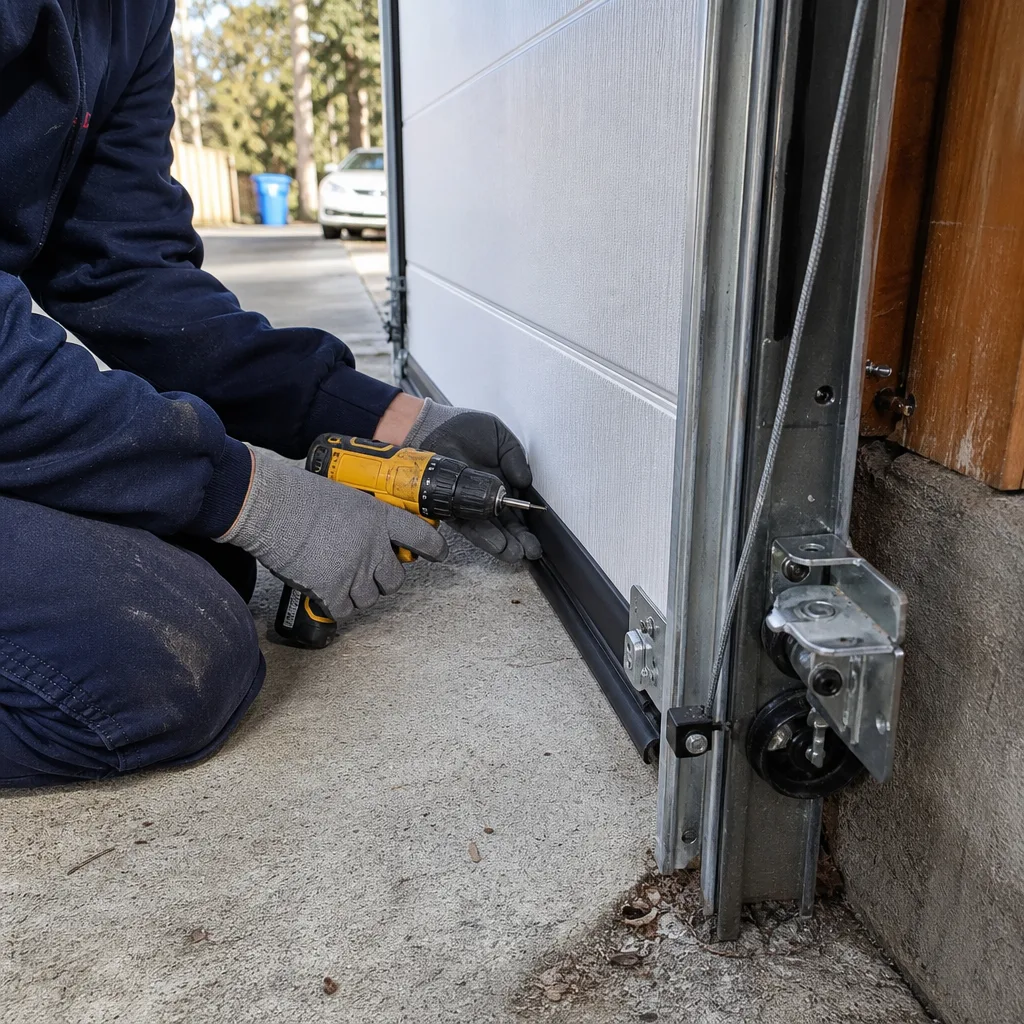
An after-the-fact permit, also called a retrospective or late permit, is applied for after work is complete. It is always more expensive, more invasive, and less certain than permitting before work begins.
In Renton, the after-the-fact process typically involves:
- A doubled or tripled permit fee as penalty
- Required exposure of covered work (removing drywall, siding, or trim to expose framing)
- Engineering review if structural elements are concealed
- Potential requirement to remove and reinstall the door to verify header and connection details
- Extended review timelines, often 2-3 weeks versus 3-5 days for standard permits
The total cost frequently exceeds $1,000 for what would have been a $300 permit if filed correctly. In cases where the work does not meet current code, the homeowner must bring it into compliance at full cost, with no grandfathering.
We’ve been called to Renton homes where a previous owner’s unpermitted widening of a garage door opening surfaced during a pre-sale inspection. The new owner faced a choice: negotiate a price reduction, pay for retrospective permitting and possible reconstruction, or walk away. In one case in the Highlands neighborhood, the unpermitted work from 2019 cost the seller $4,200 in retrospective fees, engineering, and drywall repair to clear title.
The prevention is simple: verify permit requirements before work begins, and verify your contractor has pulled the permit before they start. Ask for the permit number and confirm it in Renton’s online permit search. This takes five minutes and can save thousands.
Common Mistakes to Avoid
- Assuming all garage door work needs a permit. Like-for-like replacement in Renton typically does not. Paying for unnecessary permitting wastes money and delays your project.
- Assuming no garage door work needs a permit. The opposite error. Widening an opening by even a few inches, changing door type, or modifying the header triggers full permitting. Skipping it invites enforcement action.
- Letting the contractor “handle it” without verification. Verbal assurances are not compliance. Confirm the permit number in Renton’s permit search system before work begins.
- Ignoring wind-load requirements on permitted alterations. The inspector will check the door’s rating against the code. A door that fits but lacks proper documentation fails inspection.
- Discarding permit documentation after final inspection. Keep the Certificate of Completion with your home records. It is required for seller disclosure and valuable for insurance claims.
- Hiring unregistered contractors for permitted work. Washington requires contractor registration for all work over $500. Unregistered contractors cannot legally pull permits, and their work creates liability exposure.
- Confusing manufacturer warranty with code compliance. A door may carry a lifetime warranty and still fail inspection if installed without proper permitting or against code requirements.
When to Call a Professional
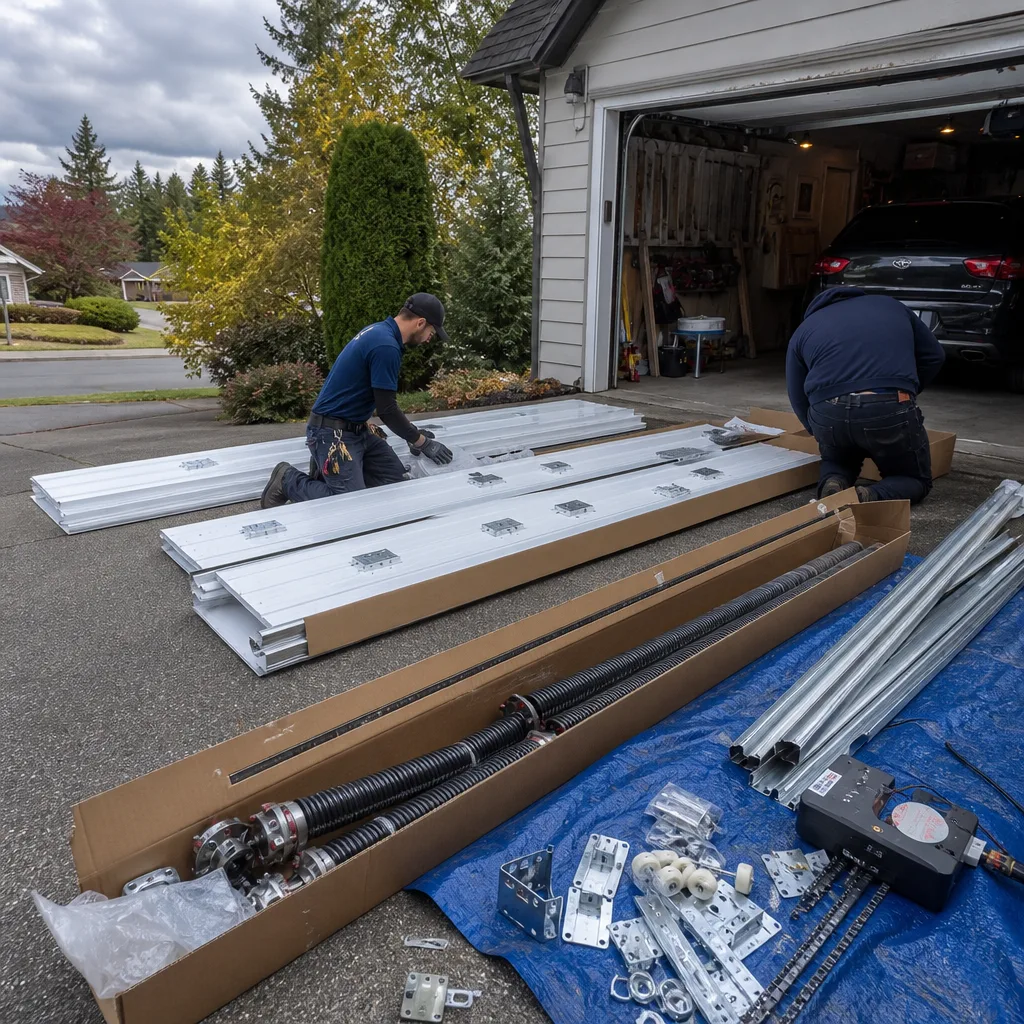
Call a professional when your project involves structural modification, when you are uncertain whether your replacement qualifies as in-kind, or when you need documentation for a pending sale or insurance matter. A thorough Garage Door Repair Maintenance Checklist for Renton Homeowners can help you prepare for that conversation. A qualified garage door contractor can assess the existing conditions, determine permit requirements, and manage the application and inspection process if needed.
At Garage Door Installation in Renton, we evaluate every project against the Washington Residential Code criteria before quoting. If no permit is required, we say so and proceed under our standard written-price system. If a permit is required, we itemize the fee, handle the application, and deliver the passed inspection record as part of project closeout. Every job includes our documented photo record and the 365-Day Done Right Promise.
For emergency repairs, Garage Door Repair in Renton provides same-day service with live phone coverage 24 hours a day, including holidays. Calls are answered by a real person, not a recording, with a named technician and an on-the-way text.
For opener issues, Garage Door Opener Repair & Installation in Renton covers all major brands including LiftMaster, Chamberlain, and Craftsman, with the same written-price-first protocol.
Servo Garage Doors Renton offers free estimates in Renton. Call (253) 518-3767 to schedule an evaluation of your project, including permit requirement verification, with no obligation.
Frequently Asked Questions
No, if the replacement is in-kind: same size, same door type, same rough opening, no structural changes. Yes, if you are altering the opening, changing the header, or switching door types. When in doubt, call Renton Community and Economic Development at (253) 518-3767 or schedule a free evaluation with us.
Residential garage door alteration permits in Renton typically cost $200-$400, combining plan review and building permit fees based on project valuation. After-the-fact permits carry penalty multipliers and frequently exceed $1,000. Call (253) 518-3767 for a free estimate that includes permit cost verification for your specific project.
Standard residential alteration permits review in 3-5 business days for complete applications. Incomplete submittals or complex structural engineering can extend this to 2-3 weeks. We factor this timeline into our project scheduling when managing permitted work.
No. Clause 1 of The Haven Standard requires a flat, written price and written scope before any work starts. If permitting is required, the permit fee is itemized in that written price. The number you approve is the number you pay. No exceptions since 2015.
Yes. Our technicians stock torsion springs, cables, rollers, hinges, weatherstripping, and logic boards for LiftMaster, Chamberlain, and Craftsman openers, plus common door hardware. For replacement doors, we measure and order from manufacturer inventory, with installation scheduled once the door arrives. Call (253) 518-3767 for same-day repair availability.
You must disclose unpermitted work on Form 17. The buyer’s inspection or title review may flag it, leading to renegotiation, a requirement to obtain retrospective permits, or deal cancellation. The cleanest path is proper permitting at time of work, creating a public record of compliance.
The Bottom Line
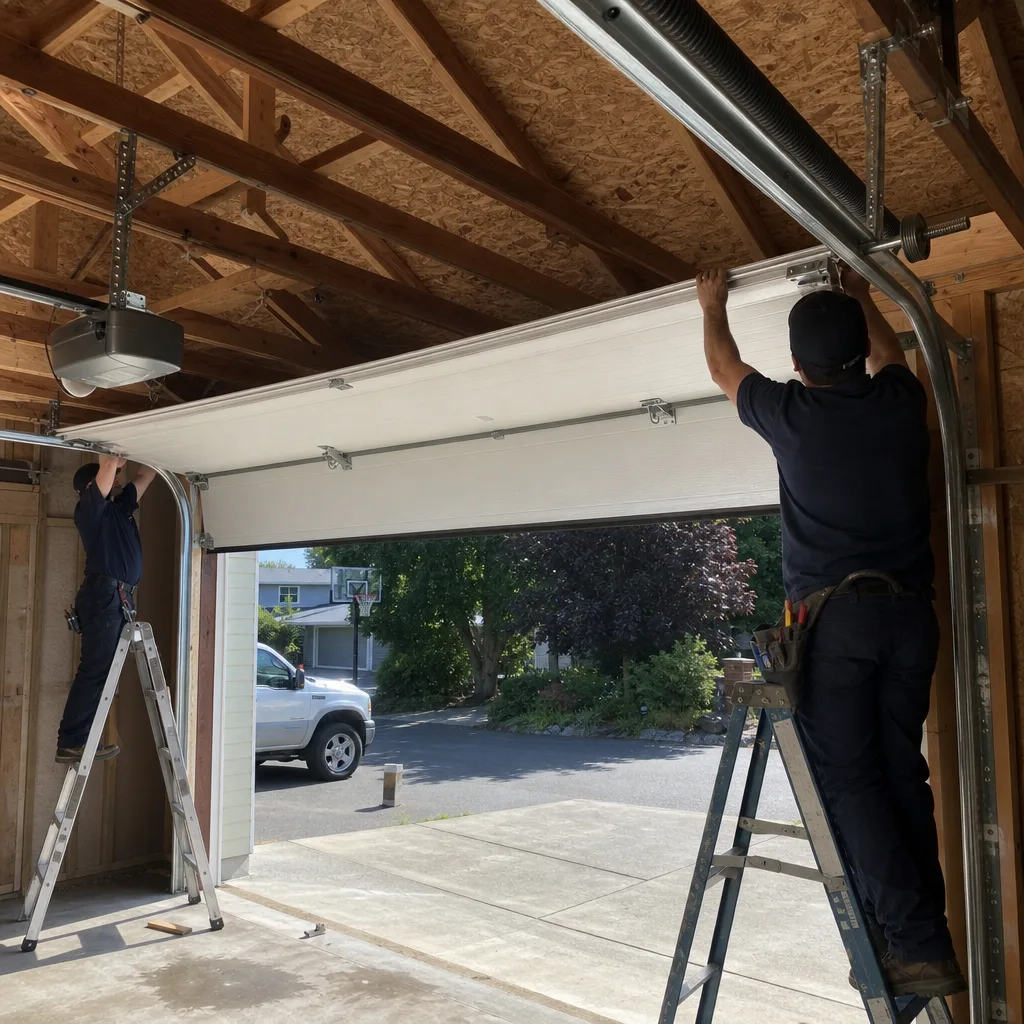
Washington’s permit requirement for garage door work is narrower than most homeowners assume and broader than some contractors admit. Like-for-like replacement needs no permit. Structural alteration demands full compliance, with real costs for getting it wrong. The line between the two is specific: touch the framing, pull the permit. In Renton, that means a $200-$400 permit, 3-5 day review, and inspection record that protects your title and your insurance coverage. The documentation you keep today becomes the asset you need tomorrow.
Written by Marcus Deller, Owner at Servo Garage Doors Renton, serving Renton since 2015.